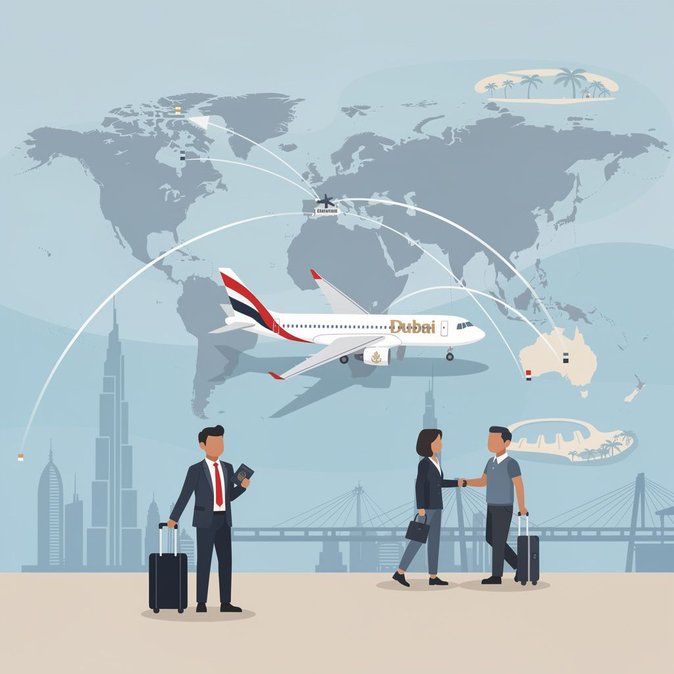
Emirates used the second day of Arabian Travel Market (ATM) 2026 in Dubai to sign 11 separate memoranda of understanding that will expand the airline’s reach into new source markets, deepen codeshare cooperation and, crucially, channel more visitor traffic through the UAE. The wide-ranging agreements cover tourism boards in Ras Al Khaimah, Japan, Sri Lanka, the Maldives and Italy’s Emilia-Romagna region, as well as strategic tie-ups with DERTOUR Group, Kuwait Airways and the Philippines’ Overseas Workers Welfare Administration. For UAE-based corporates and mobility managers the most immediate impact is expanded connectivity. The planned reciprocal codeshare with Kuwait Airways will give business travellers through-checked baggage and single-ticket itineraries on dozens of new city-pairs via Dubai, while the DERTOUR partnership strengthens Emirates’ NDC distribution in key European markets—important for travel-management companies booking corporate traffic into the Gulf. Destination marketing agreements, meanwhile, support the UAE’s wider push to promote multi-city itineraries that combine Dubai, Abu Dhabi and the Northern Emirates. Under the MoU with Ras Al Khaimah Tourism Development Authority, Emirates customers will see curated ground experiences offered through the airline’s ‘Dubai Experience’ platform, encouraging stop-overs and extending length of stay—metrics closely watched by hotels and serviced-apartment providers that host project teams and expatriate assignees. Labour-mobility professionals should note the MoU with the Philippines’ OWWA, which commits both parties to explore enhanced welfare, repatriation and CSR initiatives for the UAE’s 270,000 Filipino workers. In practice this could translate into facilitated travel for family visits and streamlined emergency repatriation—a meaningful benefit at a time when employee experience is a differentiator in talent attraction. Taken together, the 11 agreements underscore how aviation partnerships remain a backbone of the UAE’s economic-diversification strategy. By widening passenger flows and embedding the country deeper into global tourism value-chains, they reinforce Dubai’s position as a hub for both leisure and business mobility while giving multinationals greater route flexibility for moving people and goods.
Source: Emirates Newsroom