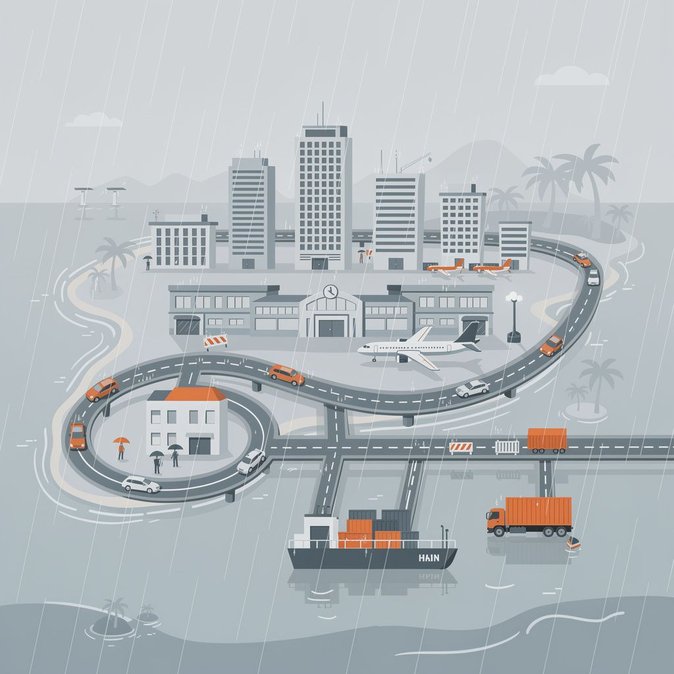
Hainan—the island province marketed as China’s Hawaii—entered emergency mode on 14 September after days of torrential rain triggered landslides and flash floods. The governments of Wuzhishan and Wanning activated the so-called ‘Five Suspensions and One Closure’ protocol: schools closed, factories halted production, businesses and construction sites shut down, public transport suspended, and tourist attractions ordered to cease operations. Highways linking Sanya and Haikou saw multiple sections cut by mudslides, and local authorities restricted non-essential road traffic across six municipalities. Sanya’s Phoenix International Airport remained open but warned of potential delays as shuttle buses and taxis struggled through flooded streets. Several cruise excursions to the Paracel Islands were cancelled, and tour operators re-routed inbound groups to Guangdong. For global-mobility managers moving staff to Hainan’s Free-Trade Port, the disruption is a reminder that the island’s tropical climate can upend relocation timelines. Companies with resort projects in Lingshui and Luguan reported evacuating construction workers to higher ground. Insurers estimate that each day of shutdown costs the tourism sector—already recovering from the pandemic—about RMB 120 million (USD 16 m). The provincial emergency-management department forecasts continued heavy rain through 17 September, urging residents and travelers to stay indoors. Airlines have issued flexible re-booking policies for flights to Haikou and Sanya between 14–18 September, and hotels are waiving change fees. Mobility teams should monitor local weather bulletins and confirm employee itineraries before dispatching assignees. Longer term, Hainan officials say they will accelerate drainage upgrades along coastal highways and fast-track an early-warning system that integrates meteorological data with transport-hub operations. Investment-promotion agencies stress that tax-incentive deadlines for foreign enterprises will be automatically extended if filings are delayed by the weather emergency.
Source: First Financial via Eastmoney