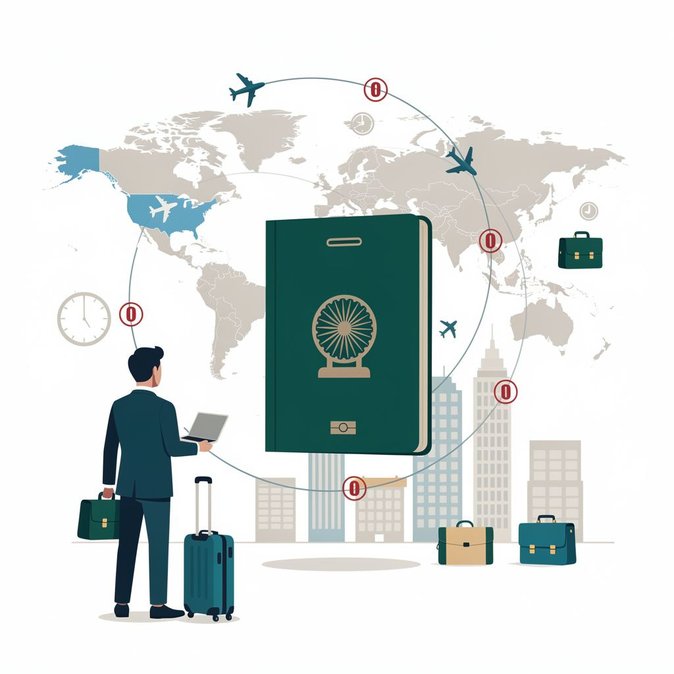
The latest quarterly Passport Reports index, released 15 September, shows India’s passport dropping two places to 134th worldwide, with a mobility score of 69. Indian citizens now enjoy visa-free access to only 25 destinations, visa-on-arrival to 39, and electronic travel authorisation (eTA) to five; visas are required for 129 countries. The slide follows Laos’ removal from India’s visa-on-arrival list and tightening entry policies in parts of the Caribbean and Pacific. By contrast, neighbouring Bangladesh gained three places after Fiji and Kenya relaxed rules for its nationals. The report underscores the widening mobility gap between South Asian passports and those of OECD economies, where holders typically access 180 plus destinations visa-free. For Indian corporates, weaker passport power translates into longer lead times and higher compliance costs for short-term assignments. Multinationals are responding by increasing use of second passports held by Overseas Citizens of India and by applying for long-validity Schengen and US visas to minimise trip-by-trip processing. Travel-management companies predict a spike in demand for premium visa-facilitation services, especially as Europe’s Entry/Exit System (EES) adds biometric capture from April 2026. Policy analysts argue India must accelerate reciprocal agreements; negotiations are ongoing with the EU for a multi-year Schengen visa ‘cascade’ and with Gulf states for expanded visa-on-arrival privileges. Until such deals materialise, Indian business travellers will continue to face one of the world’s heaviest administrative burdens. Companies should audit global-mobility policies to account for destination-specific lead times, and HR teams should brief travellers on evolving digital-visa platforms, which increasingly require biometrics and pre-travel registrations even where formal visas are not needed.
Source: Arab Times