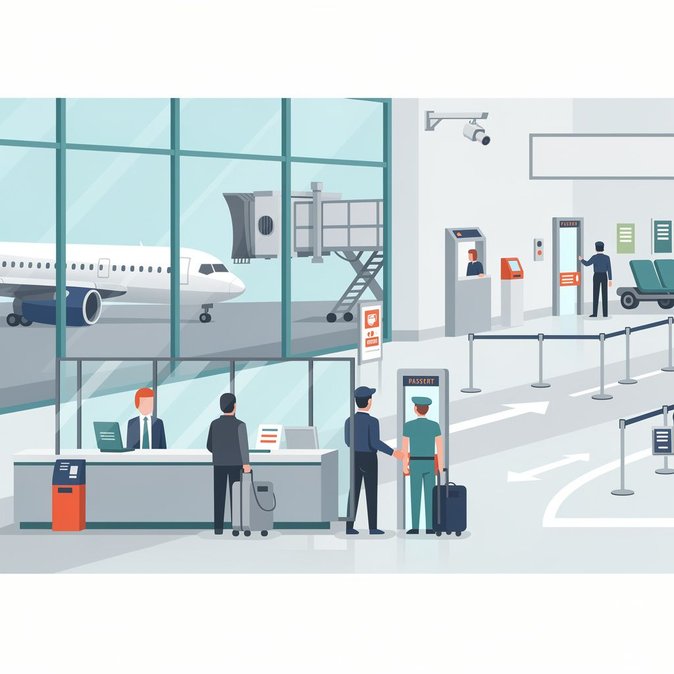
India’s civil-aviation ministry has issued a show-cause notice to Air India after three Italian passengers arriving from Amritsar transited Delhi’s Indira Gandhi International Airport and departed for Munich without mandatory departure immigration clearance on 4 September. Details of the lapse were published in a midnight directive on 15 September, with regulators calling it a “serious security and immigration breach” that undermines India’s new hub-and-spoke transfer protocol. Under hub-transfer Standard Operating Procedures rolled out this summer, carriers must segregate domestic-to-international passengers and present their documents to immigration authorities before boarding the onward flight. Investigators say Air India failed to transmit passenger data via the Advance Passenger Information System (APIS) and did not deploy escort staff at the transfer security point. The airline has 15 days to explain why penalties—including suspension of its hub-transfer privilege at Delhi—should not be imposed. The incident has jolted India’s plans to position Delhi and Mumbai as seamless regional hubs competing with Dubai and Singapore. If carriers cannot prove airtight compliance, immigration authorities may re-introduce physical stamping or secondary inspections, eroding the speed advantages that business travellers prize. Travel-management companies report a spike in client queries about transfer reliability, especially for high-value Schengen-bound itineraries. For global-mobility teams moving expatriates or senior executives through India, the key takeaway is that hub transfers remain permissible but will face tighter scrutiny. Expect additional document checks at domestic origin stations and longer Minimum Connection Times (MCTs) at Delhi until revised SOPs are issued. Companies should build contingency buffers and monitor forthcoming DGCA circulars that could mandate biometric reconciliation prior to boarding international sectors. Aviation-security consultants note that the episode highlights gaps in stakeholder coordination: while APIS data was filed for the incoming domestic leg, it was not revalidated for the international departure. Integrating airline Departure Control Systems with immigration’s IVFRT database—already underway at Bengaluru—could offer a long-term fix, but operators will need to invest in system upgrades and staff training.
Source: The Times of India