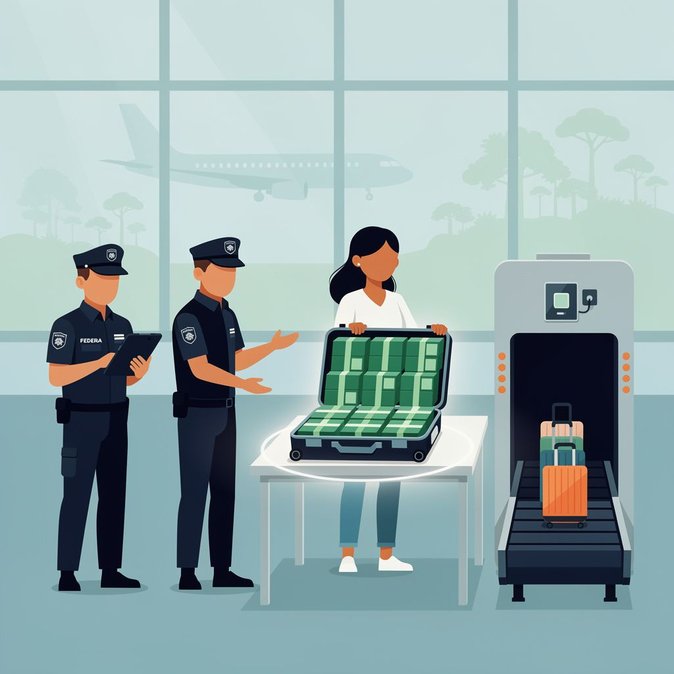
Brazil’s Federal Police (PF) intensified its airport inspections on 19 September 2026, arresting a 32-year-old passenger at Manaus Eduardo Gomes International Airport after officers discovered 13.9 kilograms of skunk—the high-potency cannabis hybrid—hidden in double-walled suitcases. The woman had purchased a one-way ticket to Brasília and attempted to board a domestic flight operated by a major carrier. Although the Amazon region has long been a corridor for narcotics moving from Colombia and Peru to Brazil’s southeastern hubs, the seizure underscores a recent PF strategy shift: targeting domestic legs where traffickers hope to avoid the international-arrivals spotlight. Since July, Manaus airport has deployed new CTX 9800 dual-view X-ray scanners funded through the Ministry of Justice’s Border Security Programme; combined with canine patrols, they have doubled drug interceptions compared with the same quarter in 2025. For international carriers and logistics providers, the operation signals heightened scrutiny of both baggage and cargo trans-shipments through Manaus, which functions as a free-trade zone handling high-value electronics and pharma goods. Aircraft turnaround times may lengthen slightly as PF conducts random secondary inspections in transit areas. Companies moving time-sensitive materials should build in contingency buffers and ensure Advance Cargo Information (ACI) filings are error-free to minimise holds. The PF said the detainee would be charged with international drug trafficking—punishable by up to 15 years in prison—and that investigations continue to trace the supply chain. The agency also plans spot-checks on river ports feeding into the airport’s logistics cluster, part of a broader “Amazon Shield” initiative aimed at disrupting organised-crime routes ahead of the October municipal elections, when security issues typically spike.
Source: Polícia Federal