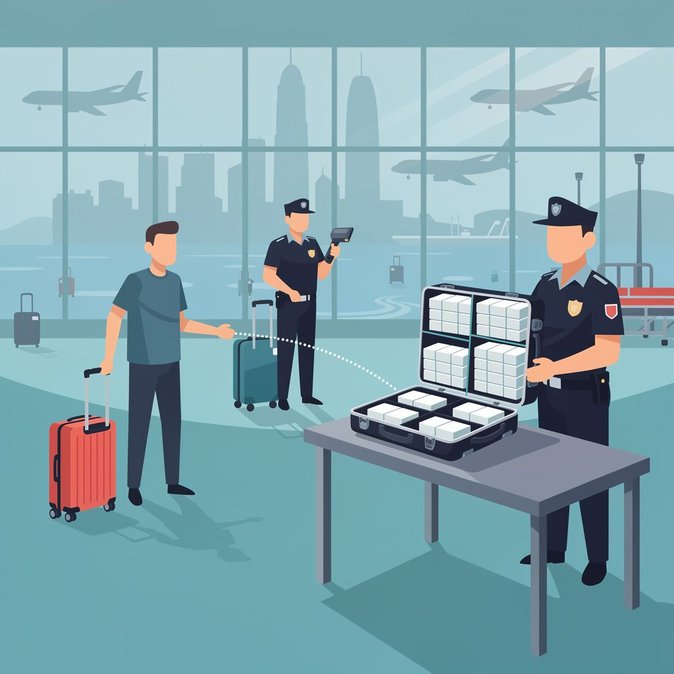
Hong Kong Customs officers intercepted a 29-year-old arriving passenger at Hong Kong International Airport (HKIA) on the morning of 20 September and discovered approximately 13 kilograms of suspected ketamine concealed in false-bottom suitcases. The haul, valued at HK$4.7 million, marks the largest single seizure of the synthetic drug at the airport since July and underlines the city’s position as a high-risk trans-shipment hub amid resurgent passenger traffic. The traveller, who had flown in from Kuala Lumpur via a Middle-Eastern connection, was arrested on suspicion of trafficking in a dangerous drug under Hong Kong’s Dangerous Drugs Ordinance. Customs officials said they acted on ‘risk-profiling and intelligence analysis’, highlighting the enhanced use of data analytics and CT-based baggage-scanning technology deployed at HKIA earlier this year. If convicted, the suspect faces a maximum penalty of life imprisonment and a HK$5 million fine. For mobility and travel-risk managers, the case is a timely reminder that Hong Kong continues to apply zero tolerance toward narcotics offences and may intensify random searches in both arrival and transit zones following significant seizures. During similar crack-downs in 2025, business travellers reported additional screening of electronic devices and extended questioning about luggage ownership, resulting in 20-to-30-minute delays at immigration counters during peak hours. Corporate compliance teams should ensure that employees on short-notice assignments understand Hong Kong’s stringent drug laws—particularly regarding cannabidiol (CBD) products, which have been classified as Schedule 1 dangerous drugs since February 2025. Hand-carried health supplements, vapes or herbal remedies that are legal elsewhere could trigger secondary inspections. Customs has urged the public to report suspected trafficking via its 24-hour hotline or online form. Travellers who believe they have been mistakenly profiled may request the presence of a duty supervisor, but cooperation with officers and clear explanation of travel purpose generally expedites clearance.
Source: HKSAR Government Press Release