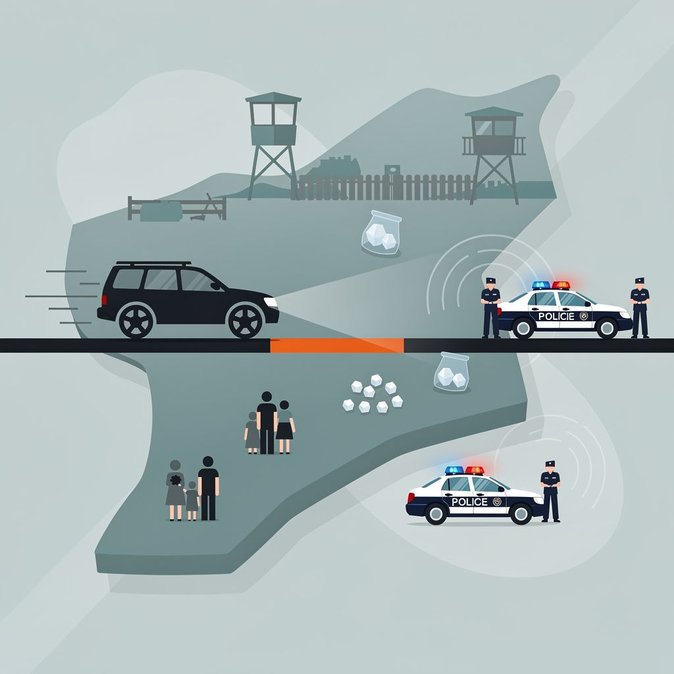
In a separate but related security incident, 35-year-old M.A.U. appeared before the Nicosia District Court on 21 September accused of twice driving through a first-degree military restricted zone, smuggling a family of five from the Republic of Cyprus into the TRNC, and possessing methamphetamine and cannabis paraphernalia. Police told the court that officers fired 15 warning shots during a chase after the suspect rammed two patrol vehicles near Balıkesir. Investigators allege the defendant charged €650 for the August operation and was arrested on 19 September following a tip-off. A search of his residence uncovered 5 grams of methamphetamine and drug-taking equipment. The court ordered seven more days of custody while enquiries continue, including ballistic tests and digital-forensics analysis of the suspect’s mobile phone, which reportedly contains WhatsApp chats with potential clients south of the Green Line. The case illustrates how people-smuggling networks have diversified their revenue streams, combining irregular migration with narcotics trafficking. For mobility-risk managers the incident reinforces EU safety advisories that warn staff against accepting unsolicited transport offers between the island’s two parts. It also strengthens calls from the Cypriot Interior Ministry to extend the Republic’s automated licence-plate recognition (ALPR) system to secondary rural roads that feed into the buffer zone. Business travellers using rental cars should expect more frequent checks and potential delays on north-south routes once the technology goes live in early 2027. Employers should update travel protocols to ban unscheduled detours across the Green Line and include emergency contact procedures in case employees are caught in police operations. Failure to comply could void corporate travel-insurance policies, many of which exclude coverage for deliberate entry into restricted military zones.
Source: News TRNC