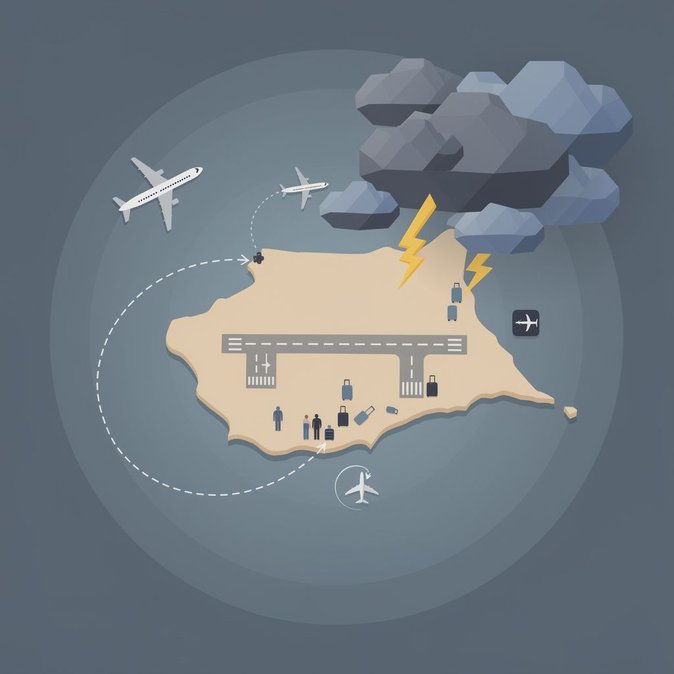
A late-summer thunderstorm system swept across Cyprus on the evening of 18 September, triggering the Civil Defence’s mass-notification ‘CY-Alert’ and briefly disrupting commercial aviation. According to Civil Defence spokesman Panayiotis Liasides, the yellow-level weather warning was deemed serious enough to warrant a nationwide text alert—even though some districts ultimately saw little or no rainfall. The heaviest downpours were recorded in the west, with Kathikas logging 24 mm and Larnaca Airport registering 26 mm in just a few hours. The intense rain and reduced visibility at Larnaca caused at least one inbound passenger flight to divert to Paphos International Airport, 130 km away, delaying onward connections and ground transport arrangements for several hundred travellers. Airport authorities reported no injuries, but passengers faced waits of up to three hours while buses were organised to ferry them back to Larnaca and other destinations. Hoteliers and tour operators scrambled to adjust late-night transfers, highlighting the knock-on effect even a single diversion can have on the island’s tightly-coordinated tourism logistics. The incident underscores the growing operational challenge extreme weather poses for businesses that rely on Cyprus’ two international gateways. September is traditionally the tail-end of the island’s peak tourist season, when aircraft movements remain high but contingency resources—such as spare coaches and hotel rooms—are already stretched. Aviation analysts note that Larnaca’s single runway and its proximity to the coast leave little margin when storm cells move rapidly off the Mediterranean. Corporate travel managers with assignees in Cyprus are advised to review duty-of-care protocols around local weather alerts. The Civil Defence indicated that future yellow warnings will not automatically trigger mass messages, but urged residents and visitors alike to monitor the Met Office bulletins and airline notifications. Businesses should also ensure that employees’ travel insurance covers weather-related delays and diversions, and that accommodation providers can offer flexible check-in policies during the storm season.
Source: Cyprus Mail