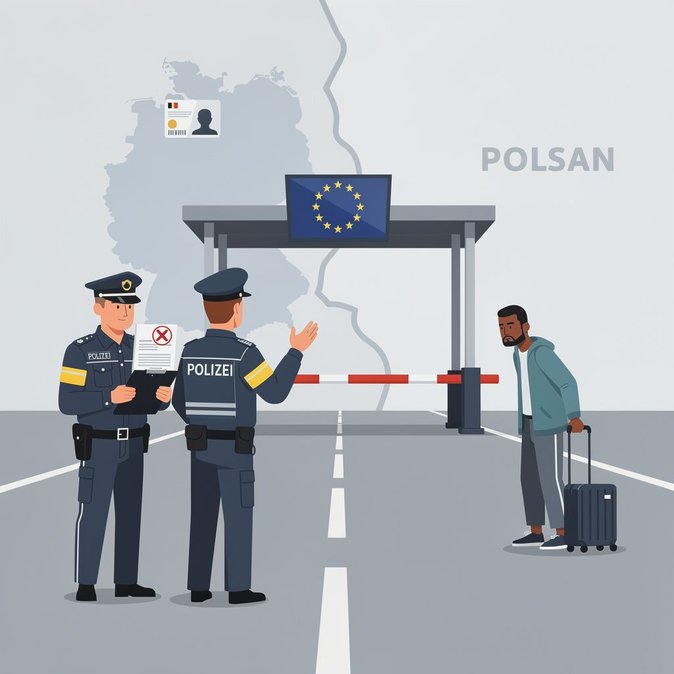
Federal Police officers at the Füssen Grenztunnel (A7) apprehended two Pakistani nationals in the early hours of 18 September after they attempted to re-enter Germany hidden in a car driven by an Afghan resident. Both men had absconded after their asylum claims were rejected in 2023 and were subject to deportation orders. Details of the case were released on 22 September 2026. The suspected Afghan smuggler was released pending trial, while the Pakistanis were placed in pre-deportation detention in Hof. The case highlights Germany’s growing use of “Zurückweisungshaft” (re-entry detention) to enforce Dublin-area returns and deter secondary movements. Since January, Bavaria alone has recorded a 19 % increase in detention orders for migrants who reappear after going underground. Businesses sponsoring work or training visas should therefore double-check that applicants have no prior deportation orders that could trigger automatic refusal at the border. Operationally, the incident demonstrates the breadth of Bavaria’s mobile border checks with Austria—measures Berlin argues are essential until the EU’s new Asylum and Migration Pact is fully implemented. Freight and staff shuttles using the A7 may encounter random searches, so logistics managers should allocate buffer time and ensure drivers carry crew manifests and employment letters. For HR and global-mobility teams, the story reinforces the importance of maintaining accurate residence documentation for employees whose asylum or humanitarian status later changes to a work permit. Failure to update the Central Register of Foreigners (AZR) can lead to wrong-person hits in police databases, risking detention at the border. At the policy level, the Bavarian Interior Ministry has renewed calls for an EU-wide biometric exit system to prevent absconders from simply trying again—an agenda item Germany is expected to push when it holds the rotating EU Council presidency in early 2027.