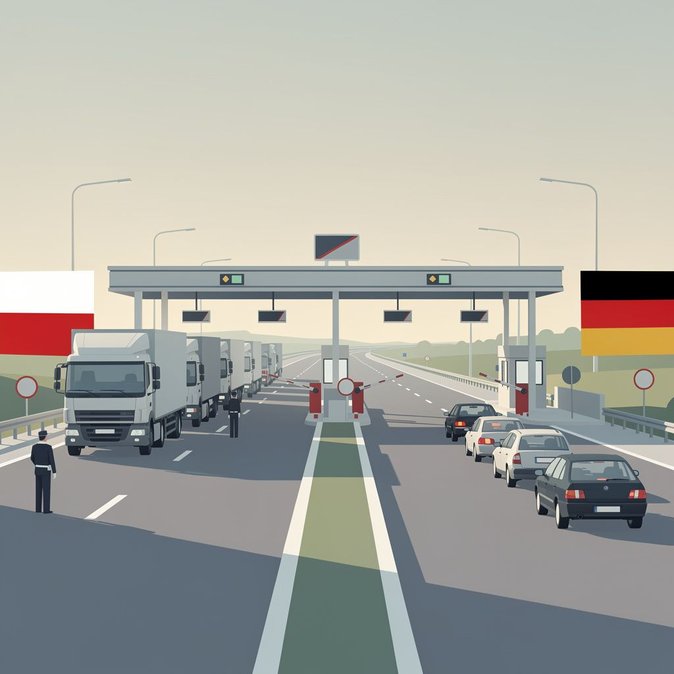
Live data from the crowd-sourced border-monitoring site KolejkaNaGranicy showed that at 09:30 CET on 22 September the longest delays on the Poland–Germany frontier were at the Świecko–Frankfurt (Autobahn) crossing, where trucks heading west waited 45 minutes. Passenger-car waits averaged 27–33 minutes at most checkpoints, while the Gubin–Guben and Zgorzelec–Görlitz bridges reported the shortest times at just over 20 minutes. Though far from the multi-hour jams seen after spot controls were first reintroduced, the figures underline how even moderate inspections can ripple through just-in-time supply chains linking German factories with Eastern European suppliers. Automotive plants in Saxony and Brandenburg that rely on Polish sub-assemblies have already warned of potential downtime when holds exceed one hour. Drivers report that Bundespolizei officers are targeting vans and small lorries for secondary inspections focused on human smuggling. Companies shipping high-value electronics have begun issuing EU Entry/Exit pre-notification letters to minimise questioning time. With the German Interior Ministry expected to decide in October whether to prolong the controls for another six months, logistics managers should continue to build buffer time into delivery slots, particularly for west-bound morning traffic when commuter flows and freight volumes peak simultaneously.