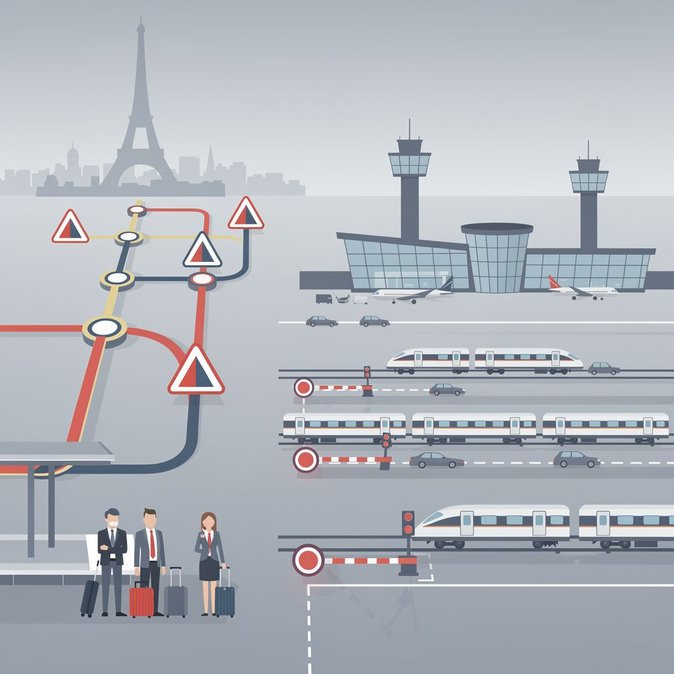
Strike-tracking site IsItAStrike.com confirms that several public-sector unions, including rail operator SNCF and urban-transport staff, will stage a nationwide walk-out on Thursday 29 September. The coordination committee filed notices under France’s 2007 minimum-service law, meaning only limited skeleton services are guaranteed. Although the protest focuses on pension-reform delays, aviation services may feel knock-on effects: RER B, the main rail connection to Charles-de-Gaulle and Orly, is expected to run one train in three during peak hours, while Orlyval shuttle frequency could drop by half. Paris Aéroport says it will publish revised timetables 48 hours in advance and advises passengers to allow an extra 90 minutes. Taxi unions have not joined the strike, but highway-maintenance workers will, raising the risk of “opération escargot” slow-rolling convoys on the A1 and A6 approaches. Airlines plan to waive change fees for flights on 28–30 September, and several multinationals are postponing inbound assignee orientations until early October. For employers, the strike triggers the need for derogatory travel certificates (“ordre de mission”) if staff are required on site. HR departments should verify whether local prefectures will recognise digital signatures on those forms, as practices varied during previous actions in 2025. Firms with posted workers should review contingency accommodation budgets in case late-night flights divert to provincial airports. While strikes are common in France, the timing—between the papal visit and a possible easyJet pilot stoppage—raises cumulative disruption risk. Mobility planners are urged to set up real-time communication channels to keep travellers and expatriates informed.
Source: IsItAStrike.com