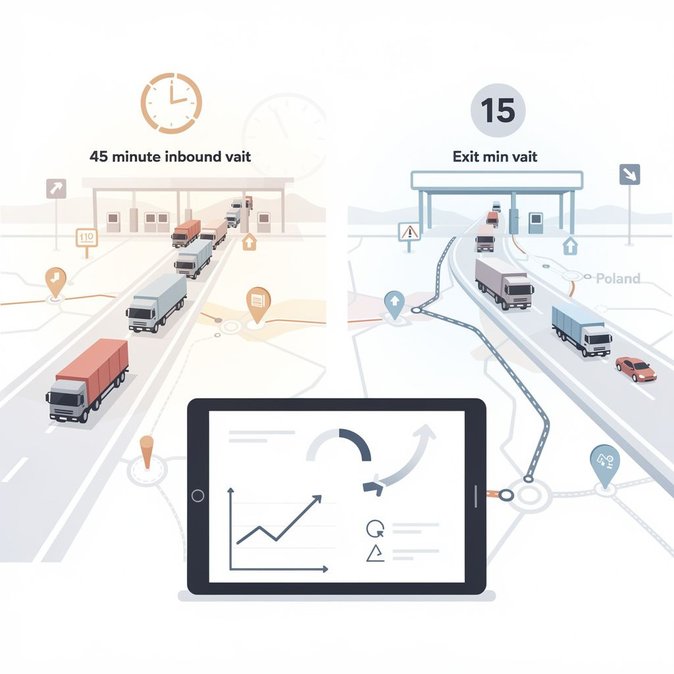
Real-time data from travel-analytics platform KolejkaNaGranicy.pl show that as of 15:52 Warsaw time on 24 September the Koroszczyn–Kozlovichi truck corridor on the Belarus border had the longest wait to enter Poland—45 minutes—while the fastest exit point was Dorohusk–Yagodyn (15 minutes). The site attributes the backlog partly to enhanced inspections following Germany’s temporary re-introduction of Schengen controls, which is pushing some freight traffic eastward. For logistics managers, the numbers translate into costly driver-hours: a 45-minute dwell at Koroszczyn equates to roughly €27 in labour and fuel per articulated lorry, according to the Polish Road Freight Association. Manufacturers running ‘just-in-time’ supply chains from Belarus or the Baltic states are advised to consider the Terespol–Brest crossing as a back-up; its queue averaged 1 h 15 min today but is less volatile overnight. Passenger vehicles face similar patterns. With Poland’s autumn school break starting next week, family travellers heading to Lithuanian resorts should expect peak congestion between 17:00 and 21:00 at Budzisko–Kalvarija. Airlines operating from Warsaw and Kraków reported only minor check-in impacts, but companies that bus shift-workers across the border—especially in e-commerce fulfilment centres near Poznań—may need to adjust rostering. KolejkaNaGranicy aggregates feeds from granica.gov.pl, Ukrainian eCherha and crowd-sourced driver reports, refreshing every 10 minutes. Mobility teams can integrate the API into their travel dashboards or set SMS alerts when wait times exceed a chosen threshold. Tip: queues are typically shortest between 01:00 and 05:00. Rescheduling departures to early morning can shave up to 30 minutes off crossing times and reduce the risk of drivers breaching EU tachograph limits.
Source: KolejkaNaGranicy.pl