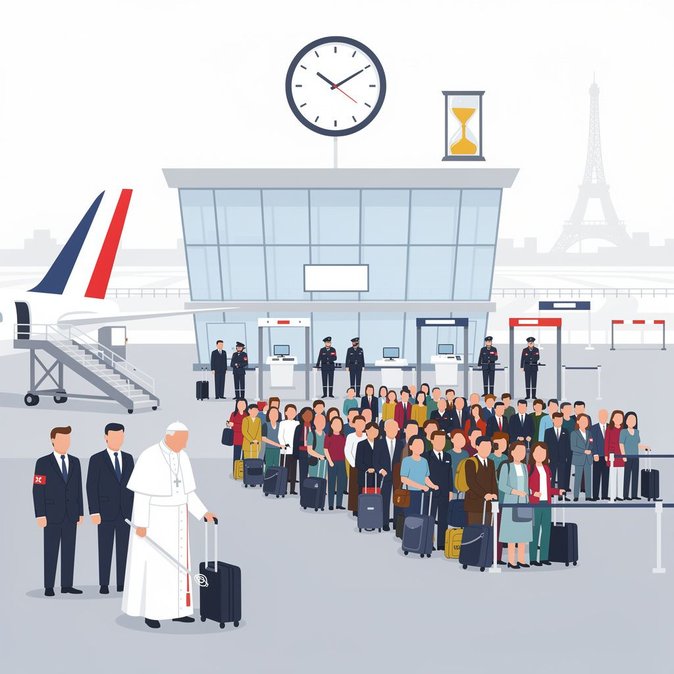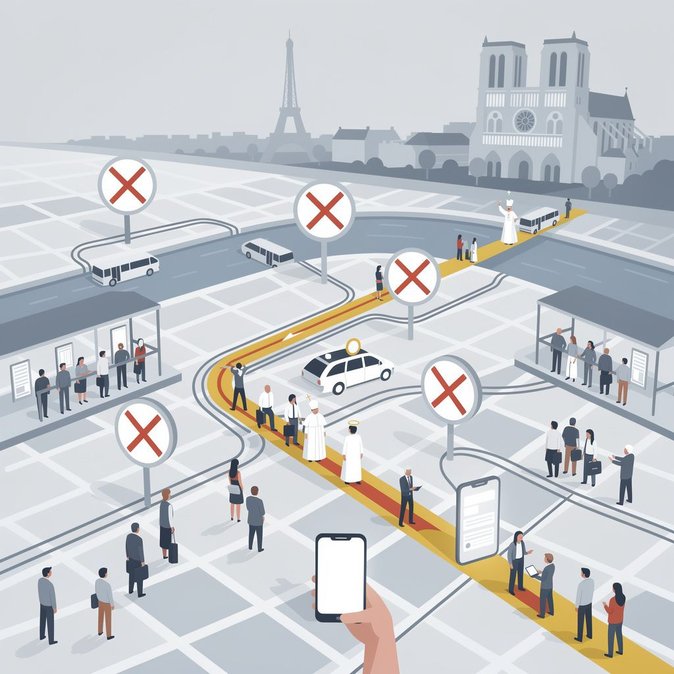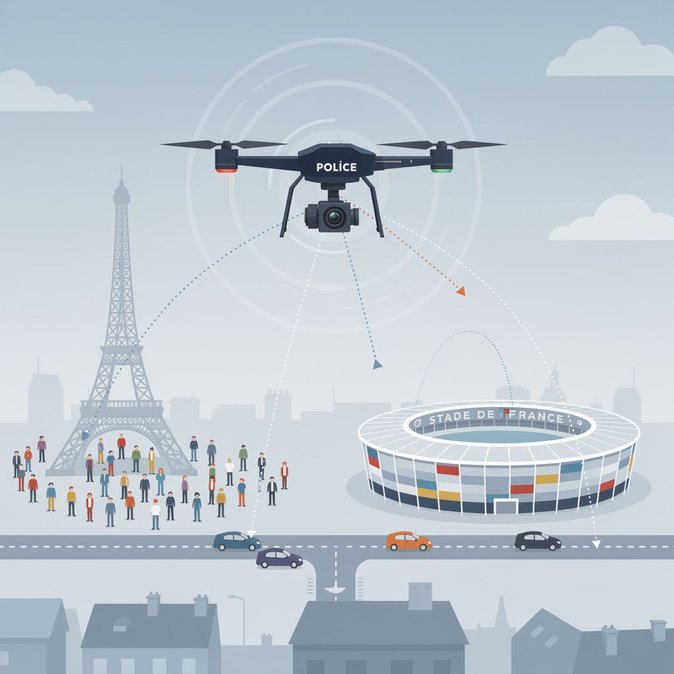
A series of préfectoral orders (n°2026-01181 to 01185) published on 24 September gives French police legal cover to deploy camera-equipped drones above Paris and the Stade de France during Pope Léon XIV’s visit on 25-26 September. The authorisations permit live image capture and transmission to command centres under France’s 2023 ‘aeronef’ security law. Drones will monitor crowd density, queueing times and potential security threats along the papamobile route, the Concorde mass site and the evening prayer vigil in Saint-Denis. Privacy advocates note that the orders cite article L.242-2 of the internal security code, limiting footage retention to 30 days and prohibiting facial recognition. Still, civil-liberty groups have announced an expedited appeal to the Conseil d’État, arguing that blanket aerial filming of public worshippers is disproportionate. For mobility planners the drone feed is critical: live heat-maps will allow police to open or close pedestrian corridors and reroute buses in real time, reducing the risk of dangerous overcrowding. The Préfecture de Police says data will also feed into an AI tool that predicts spill-back onto the boulevard périphérique, enabling dynamic lane management. Business implications include potential temporary air-space restrictions (NOTAMs) within Paris CTR, impacting media helicopters and urgent medical flights. Commercial drone operators must file SORA updates reflecting the temporary no-fly zones. Corporate security teams organising VIP movement should factor in tighter clearance processes at heliports and rooftop pads. France first used large-scale drone surveillance during the 2024 Olympics; the papal visit marks its return for a religious mass gathering. With almost two million faithful expected across all venues, authorities insist the technology offers the only scalable way to maintain situational awareness without more invasive ground barriers.