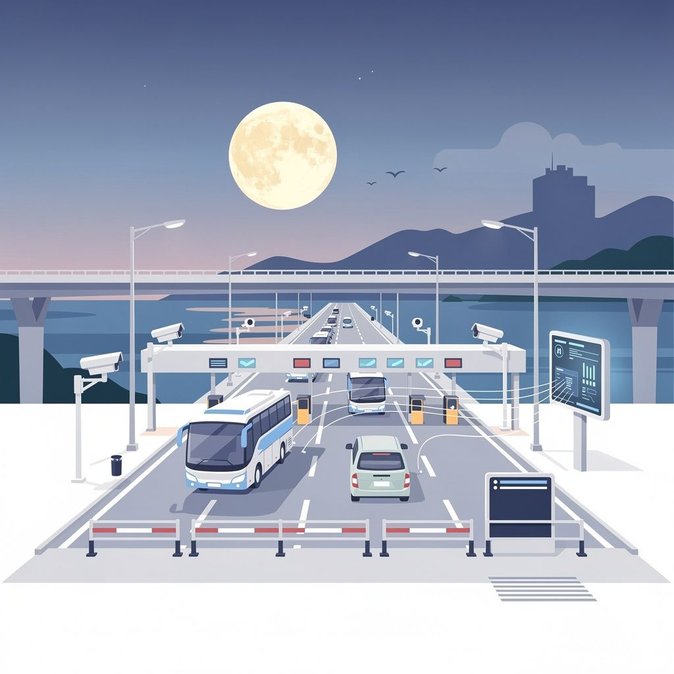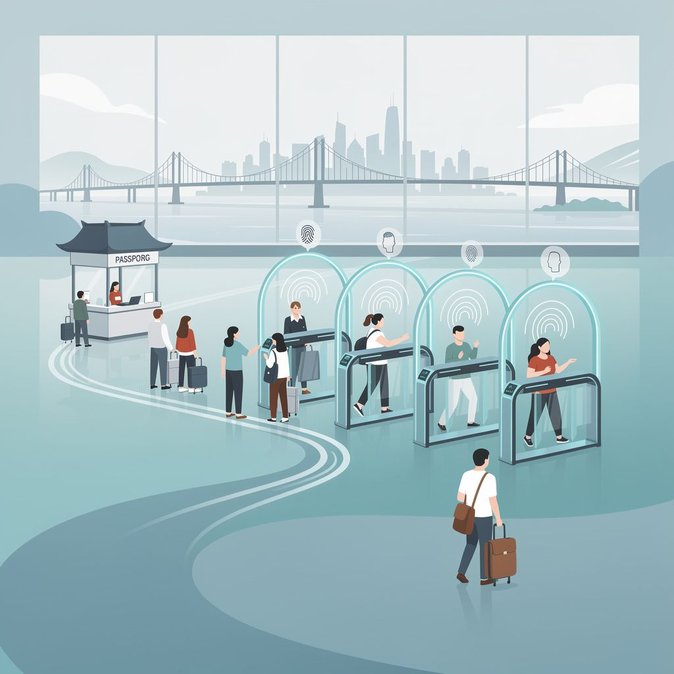
Hong Kong is accelerating contact-less border clearance. On 24 September the Immigration Department relaxed the criteria for joining its pilot Seamless e-Channel at the Hong Kong–Zhuhai–Macao Bridge (HZMB) Port. Permanent residents aged 11 or above now qualify if they have crossed the bridge six times within the previous 90 days—down from the earlier threshold of 10 trips. Eligible adults can complete enrolment directly at designated e-Channels, or through the department’s mobile app. The process links the chip in Hong Kong smart identity cards with facial-recognition gates, letting travellers clear immigration in seconds without presenting documents or touching surfaces—an efficiency boost welcomed by companies shuttling staff to the Pearl River Delta. Since the pilot launched on 25 June, more than 14 000 residents have registered and made over 100 000 seamless crossings. Authorities are now analysing performance data and considering rolling the technology out to the airport and other land checkpoints, as well as expanding it to non-residents such as frequent business visitors from mainland China. For corporate mobility managers the update matters on two fronts. First, staff who commute for meetings or manufacturing supervision can sign up sooner, cutting queue time and mitigating pandemic-era hygiene concerns. Second, the move signals that biometric automation—already standard at Hong Kong International Airport’s e-Gates—is moving toward a full “One ID” journey across all modes of transport. Companies should brief travelling employees on the opt-in prompt that now appears automatically on screen so they can capture the benefit on their next trip. Border digitalisation also strengthens Hong Kong’s competitiveness against neighbouring Shenzhen and Macau, both of which are pursuing smart-port initiatives. By allowing younger travellers to enrol and reducing paperwork, the city is lowering friction for the cross-boundary talent flows critical to Greater Bay Area integration.
Source: news.gov.hk