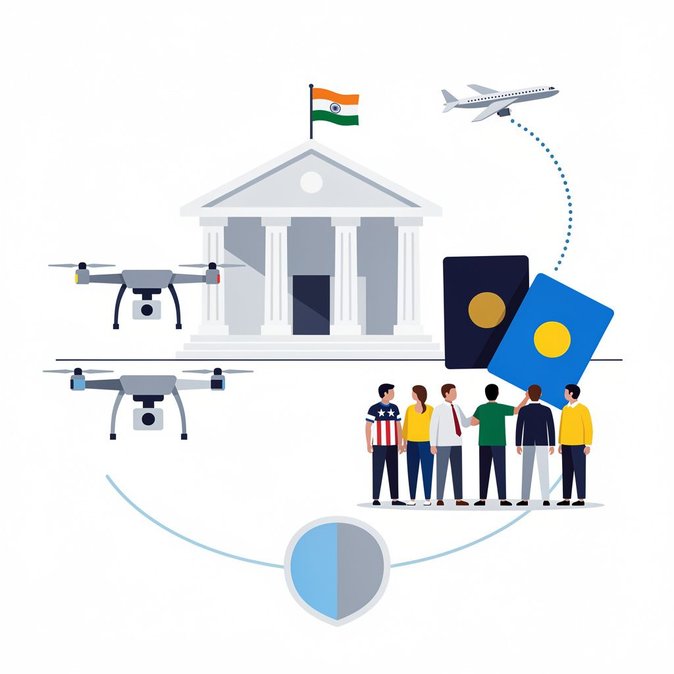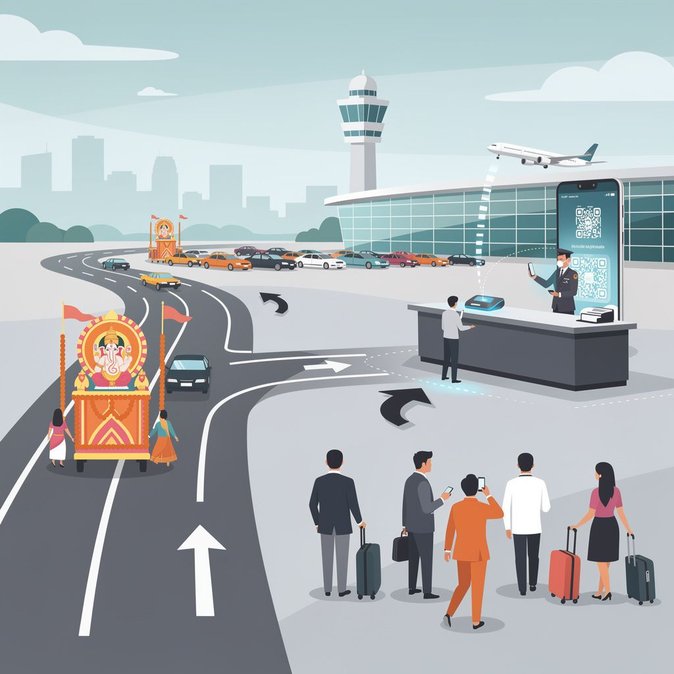
Rajiv Gandhi International Airport (RGIA) in Hyderabad has issued a passenger advisory ahead of Friday’s Ganesh idol immersion processions, one of the city’s largest annual street events. The Cyberabad Traffic Police plan extensive diversions from the evening of 24 September through the early hours of 25 September, affecting the main expressway that links the IT corridor and the Outer Ring Road with the airport. Airport authorities are urging both departing and arriving passengers to leave at least two extra hours for the road journey, pre-book cabs, or use the dedicated Pushpak airport bus to avoid missed flights. While the traffic warning is temporary, RGIA used the notice to remind international passengers of a more permanent change that quietly took effect on 1 September: immigration officers no longer stamp physical or electronic boarding passes on departure. Instead, travellers present the QR-coded e-boarding pass generated at check-in, which immigration scans and validates in the back-end iVFRT system. Removing the physical stamp removes one queue, shortens the “kerb-to-gate” time, and aligns Hyderabad with the Bureau of Immigration’s push toward fully contact-less border control at major Indian airports. For corporate travel managers the takeaway is double-edged. In the short term, employees transiting Hyderabad today and tomorrow may need ground-transport contingency plans. Over the medium term, the stamp-free process means printed boarding passes are no longer mandatory—a change that should be reflected in travel policies and mobile-device guidance. Airlines have been told to update their departure control systems so that boarding agents can see the real-time immigration clearance signal; failure to comply could result in penalties similar to those recently served on carriers for other procedural lapses. The rollout is an early example of how India’s five-year, Rs 1,800-crore Immigration, Visa, Foreigners Registration & Tracking (iVFRT) 2.0 programme is beginning to surface at the passenger interface. Similar “digital fast-lanes” are expected at Delhi, Mumbai and Bengaluru before the end of the year, according to officials, further standardising India’s exit procedures for frequent flyers.