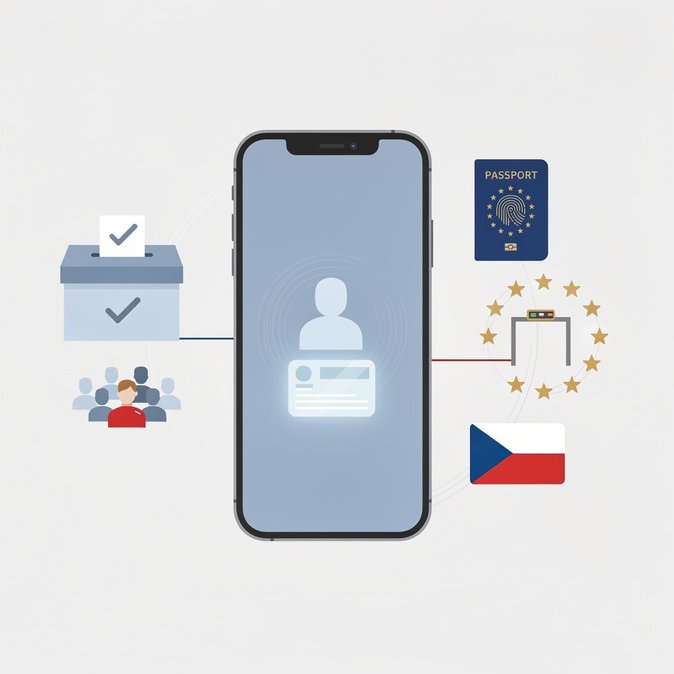
The Digital and Information Agency (DIA) released a major update of the Czech Republic’s eDoklady mobile-ID application on 25 September 2026, a move with wider implications than the upcoming local elections. The refreshed version—now live on both Apple and Google stores—improves system capacity, speeds up log-in authentication and adds support for iOS 27. Citizens are urged to download the update before using the digital ID at polling stations on 9-10 October. While the immediate focus is domestic, the upgrade represents another building block in Prague’s plan to align with the EU Digital Identity Wallet, slated for rollout across the Union in late 2026. Once mutual recognition agreements are finalised, eDoklady could serve as an accepted travel credential for EU citizens moving across borders—eliminating the need to carry a physical passport for intra-Schengen trips. For internationally mobile employees, a reliable digital ID promises faster hotel check-ins, seamless car-hire procedures and fewer requests for redundant data. DIA says the app already lets users share only the attributes that a service provider legitimately needs, reducing the exposure of sensitive personal information such as national ID numbers. From a compliance standpoint, companies hosting assignees in the Czech Republic should confirm that the upgraded app meets their Know-Your-Customer (KYC) obligations when onboarding staff to local payroll or social-security systems. They should also watch for forthcoming secondary legislation that will specify when private-sector entities must accept the digital ID in lieu of a plastic card or passport. Looking ahead, Czech lawmakers have signalled that a draft amendment to the Act on the Residence of Foreign Nationals will incorporate eDoklady as an accepted proof-of-identity for certain immigration filings, potentially slashing wait times at Foreign Police offices. DIA’s latest stability improvements are therefore an important milestone on the road toward fully digital mobility documentation.