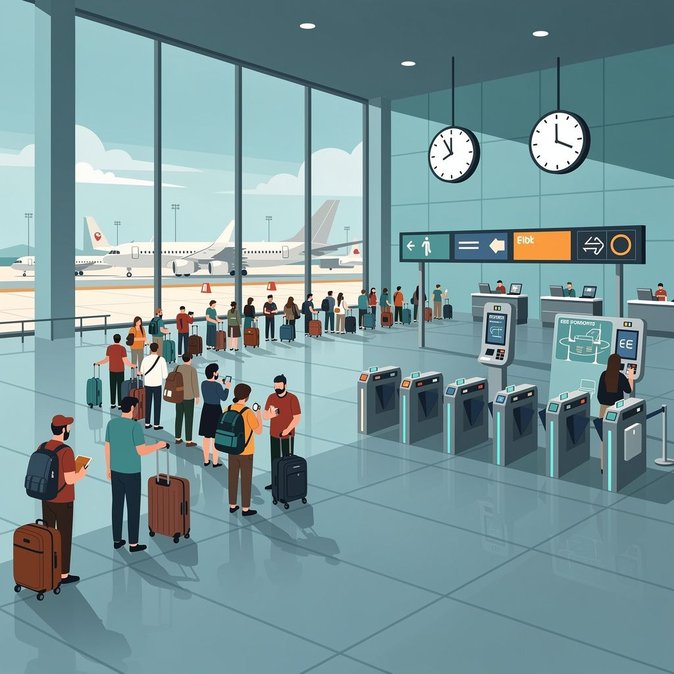
Real-time data from independent tracker EESQueue shows that non-EU passengers arriving at Prague’s Terminal 1 faced an average wait of 50 minutes at the biometrics kiosks during the evening peak on 25 September. Although down from the 80-minute highs recorded earlier this month, Prague remains one of the slower Schengen airports, ranking fourth-worst after Milan Malpensa, Brussels and Budapest. The EU’s Entry/Exit System (EES), which went fully live across the bloc on 10 April, records fingerprints and facial images of third-country travellers to automate the 90/180-day stay calculation. Industry groups blame unfamiliarity with the kiosks and a high proportion of passengers who skip the pre-registration step for Prague’s persistent queues. The airport’s Board of Directors has already ordered extra signage and is trialling an additional manned checkpoint, but the results have yet to translate into consistently shorter lines. Unlike several EU states that operate a “flex mode” allowing officers to revert to manual stamping when waits exceed set thresholds, Czechia has so far run EES continuously. Border police argue that suspending the system would undermine data quality just as Schengen states prepare to introduce the linked ETIAS travel authorisation next year. For global mobility teams, the continued bottlenecks mean advising business visitors to budget at least an extra hour between scheduled arrival and any onward meetings. Companies bringing short-term assignees into Czechia may also see higher costs for meet-and-assist services, which have become a popular workaround for VIP clients. The next critical test will be the 28 September public holiday, traditionally a busy inbound day for returning weekend travellers. Passenger-flow forecasts from EESQueue suggest waits could top 60 minutes unless the new measures deliver immediate gains.
Source: EESQueue live status