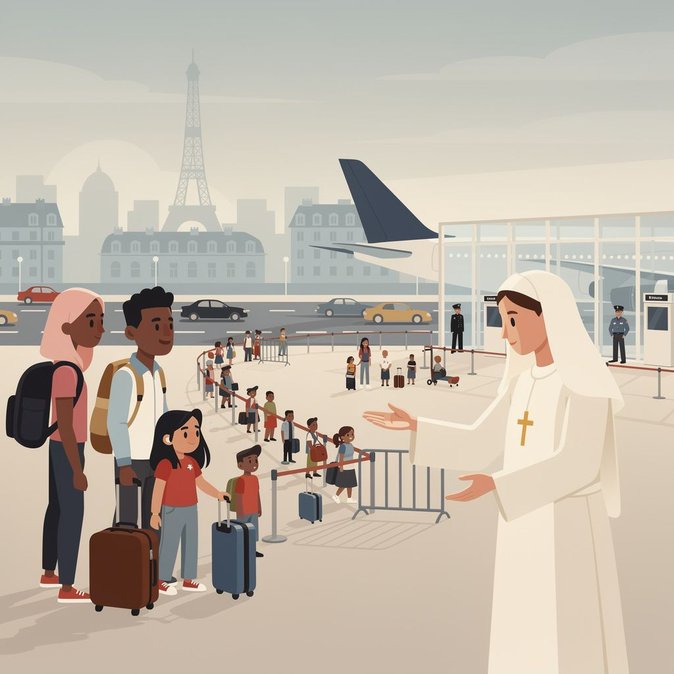
Pope Leo XIV’s historic four-day trip to France reached its peak this morning, 26 September 2026, with a massive open-air Mass on the Champ-de-Mars that drew an estimated 800,000 worshippers. In the hours leading up to the liturgy the pontiff stopped at Maison Bakhita, a Paris-based association that provides temporary shelter, legal aid and French-language tuition to asylum-seekers. Surrounded by Sudanese, Afghan and Venezuelan families, the Pope called on France to ensure that “every newcomer can live in dignity and peace.” Although papal visits are largely ceremonial, this one lands at a politically charged moment. France is heading into a presidential election year in which the far-right National Rally is campaigning on dramatically tighter immigration controls. In recent weeks party leader Marine Le Pen has promised referendums on asylum rules and automatic expulsions for irregular migrants. By giving migrants centred visibility—televised to millions—the Pope has injected a moral dimension into an already heated national argument. French authorities have spent months preparing mobility logistics for the visit. Temporary Schengen-internal border checks were reinstated at 42 road crossings, and Paris Airports set up special ‘pilgrim lanes’ to ease the surge of charter flights. Business travellers passing through Charles-de-Gaulle this weekend reported wait times of up to 90 minutes at passport control, in part because biometric Entry/Exit System (EES) kiosks were switched to manual processing to accommodate large groups of older visitors unfamiliar with the technology. Corporate mobility managers are advising staff to avoid central Paris until Monday afternoon, when road closures around Place de la Concorde and the Latin Quarter are lifted. Eurostar has waived change fees for tickets dated 25-27 September, citing “exceptional passenger flows.” Employers should also note that hotel availability remains at less than 15 percent across the capital, inflating nightly rates above €450—an important cost factor for last-minute assignees. Beyond the logistical ripple effects, the visit underscores how immigration and integration will dominate France’s policy agenda in 2027. Whether the government embraces the Pope’s appeal for “courageous hospitality” or doubles down on deterrence measures will shape residence-permit processing times, talent-passport quotas and overall labour-market competitiveness for years to come.
Source: AFP