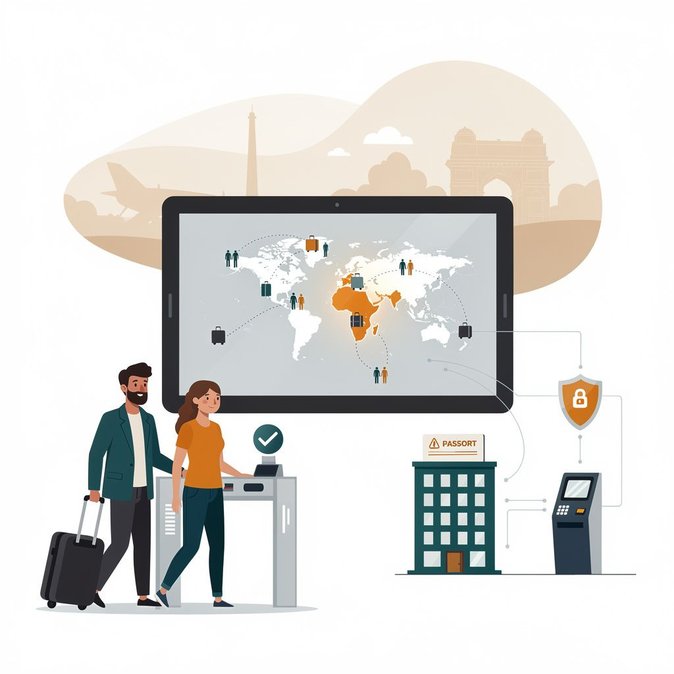
The Ministry of Tourism used the run-up to World Tourism Day (27 September) to showcase how India’s visa modernisation drive is underpinning a wider “Digital Agenda and Artificial Intelligence to Redesign Tourism”. In a press note issued on 26 September, officials highlighted three pillars that will shape inbound and outbound mobility over the next year: (1) expansion of the e-Visa platform—which already covers five broad visa categories across 172 nationalities—to additional countries and visa sub-classes, (2) integration of AI chat-bots and predictive analytics into the Incredible India portal to provide travellers with customised itineraries and dynamic visa guidance, and (3) the roll-out of NIDHI+, a cloud-based registry that links hotels’ compliance data with foreigners’ registration records in near-real time. According to ministry data, e-Visa issuances grew 42 % year-on-year in the April–August 2026 period, with business and medical travellers accounting for almost one-third of approvals. Officials say AI-driven risk-scoring has helped cut average e-Visa processing time to nine hours, a critical metric as India targets 15 million foreign arrivals by 2028. For Indian corporates, faster inbound processing translates into quicker turnaround for global clients and project teams. Conversely, the government is negotiating reciprocal digital-visa arrangements—modelled on the recent India-UAE corridor—to ease short-term assignments for Indian talent overseas. Travel managers should therefore expect additional “trusted traveller” schemes that link passport data with DigiLocker and biometric corridors at major airports. Practical takeaway: companies bringing foreign experts into India should migrate to the e-Visa interface if they have not already done so, ensure their accommodation partners are registered on NIDHI+, and monitor forthcoming AI-based compliance alerts that will replace manual Form C filings.
Source: Press Information Bureau