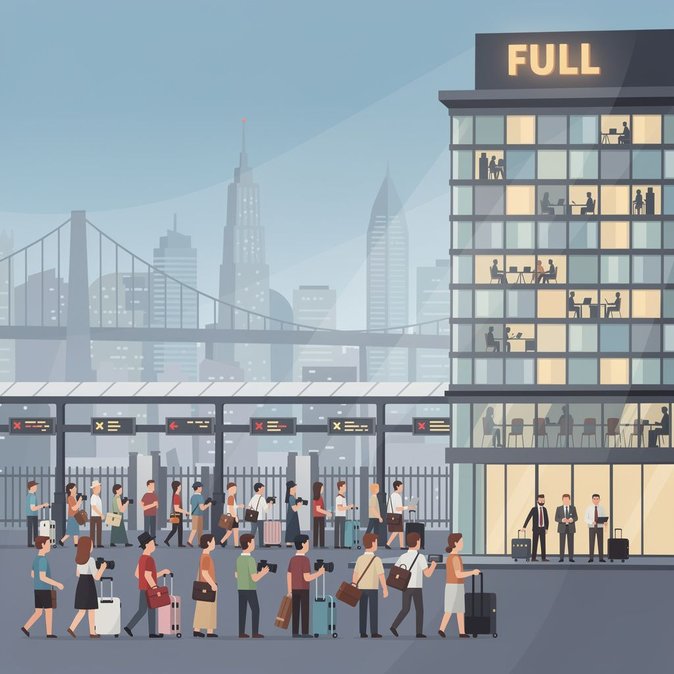
With more than 5,000 foreign exhibitors descending on Zhejiang’s capital this week, the provincial Exit & Entry Frontier Inspection Station has rolled out a six-point facilitation plan to keep people and goods moving at the fifth Global Digital Trade Expo (GDTE). Local media report that over 36,000 inbound arrivals are forecast at Hangzhou Xiaoshan International Airport alone during the 19-27 September show period, a 6.5 % jump on the previous week. Key measures include a dedicated ‘GDTE Entry Lane’ at the airport, port-visa counters for exhibitors who could not secure a visa overseas, and real-time multilingual support via the national 12367 immigration hotline. Temporary service desks inside the exhibition halls allow foreign visitors to extend or convert short-stay visas into business residence permits without leaving the venue – a first for a major trade fair in China. Additional clearance booths have been opened at alternative ports of entry in Ningbo, Wenzhou and Yiwu to disperse peak flows. Zhejiang’s public-security officials say the pilot mirrors facilitation packages used during last year’s Asian Games and could become a template for other large-scale events in China’s post-pandemic reopening. The model blends physical infrastructure (automated e-gates and bilingual signage) with online services that push policy updates to travellers’ phones. Organisers hope smoother entry will translate into higher on-site spending and deeper deal-making at a fair positioned as China’s answer to CES. For corporate travel and mobility teams, the pop-up visa-on-arrival option is particularly valuable: groups arriving on charter flights can have passports pre-cleared, reducing dwell time to under ten minutes. Companies with late-adding delegates should coordinate with qualified Chinese travel agencies authorised to submit online manifests 24 hours before arrival. Employers should also note that visa extensions granted at the expo are tied to the holder’s GDTE accreditation badge; loss of the badge will invalidate the permit. Beyond the expo, Zhejiang officials hinted that similar fast-track lanes could be installed permanently at Xiaoshan Airport to support the province’s growing roster of international sports and tech events. If adopted nationwide, such micro-facilitation schemes could make China’s visa regime more responsive to business-travel needs even without broad policy overhauls.
Source: ezhejiang.gov.cn