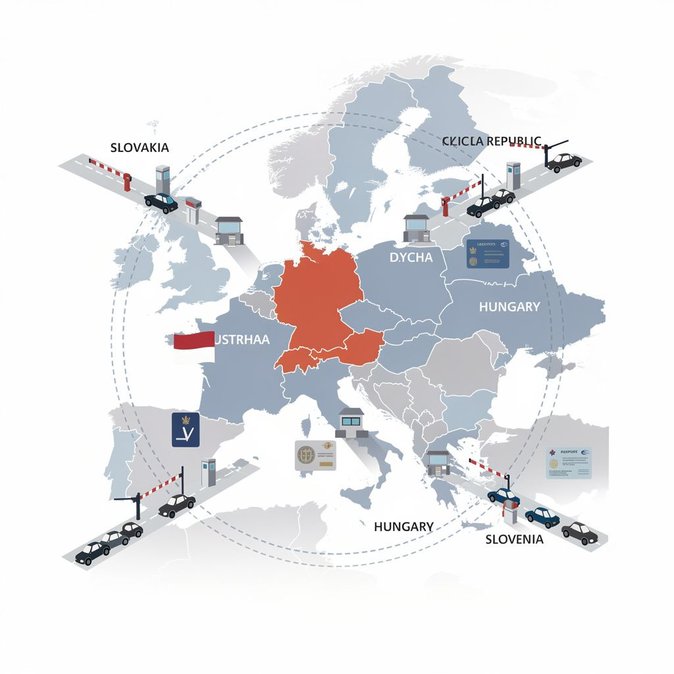
The European Commission’s Schengen monitoring portal was updated on 28 September to reflect the latest notifications of temporary internal-border controls. Austria’s current measure, which began on 16 September 2026, is now formally recorded as running until 15 March 2027 on the land and river borders with Slovakia and the land borders with Czechia, Hungary and Slovenia. Vienna cites continued irregular-migration pressure, the impact of Russia’s war on Ukraine and security risks linked to recent incidents in Spain’s Ceuta enclave. For multinationals moving staff or goods across Central Europe, the six-month extension means that systematic ID checks—and potential queues—remain possible on four of Austria’s key road corridors, including the busy A4/A6 route used by shuttles between Bratislava and Vienna. Rail operators have already been asked to keep conductors’ ID-verification protocols in place on cross-border ÖBB and RegioJet services. While business-visa holders and EU citizens can ordinarily use the fast lanes, HR departments are urged to remind third-country assignees to carry residence cards at all times; failure to present originals can lead to delayed entry or administrative fines under Austria’s Fremdenpolizei Act. Logistics providers should monitor queuing times via the interior ministry’s BLE Traffic app, which now issues real-time alerts when border wait times exceed 20 minutes. The Commission’s notice also lists similar extensions by Germany, Italy and Denmark, underscoring that ad-hoc Schengen checks are becoming a semi-permanent feature. Employers with distributed workforces may wish to revisit remote-work policies to minimise routine business travel between Austria and its neighbours during peak holiday periods.