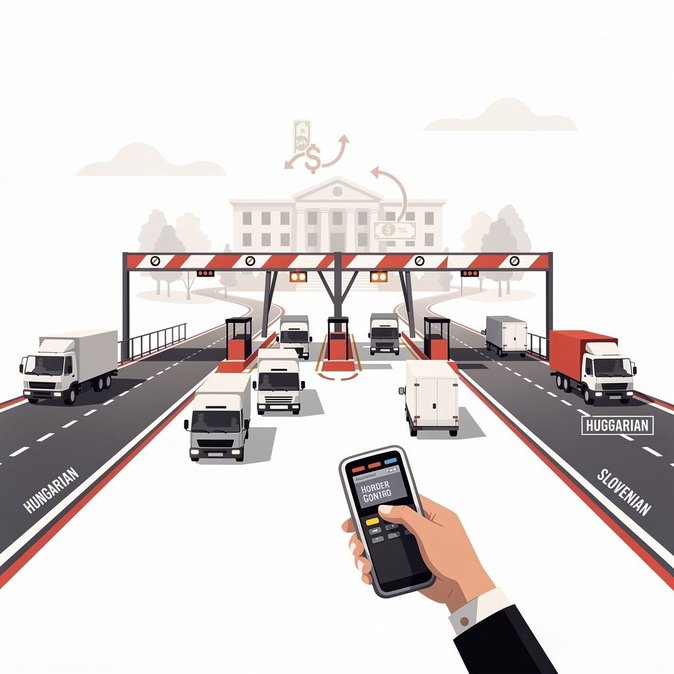
In a notice to the press issued on 27 September, the Austrian Interior Ministry announced a briefing for 29 September in which Minister Gerhard Karner will outline plans to “save on asylum, invest in security.” While precise figures will be unveiled at the press conference, ministry sources say the 2027 draft federal budget foresees reducing administrative spending on the Basic Care system by up to €110 million and redirecting a significant share to modernise land-border infrastructure. The re-allocation is expected to accelerate deployment of mobile passport-scanning units and additional thermal-imaging cameras at the Hungarian and Slovenian frontiers, where Austria reintroduced Schengen checks earlier this month. Funds are also earmarked for expanding charter-flight capacity for returns and for additional liaison officers stationed in key transit countries along the Balkan route. Corporate mobility managers should anticipate more frequent spot-checks on coaches and company cars crossing into Austria, especially outside regular opening hours of smaller crossings. Logistics firms that routinely rely on “green lanes” for just-in-time deliveries may need to build extra time buffers until the new infrastructure is operational and officers are trained on upgraded equipment. Non-EU assignees already holding Red-White-Red Cards are unlikely to be affected, but new humanitarian entrants could face longer waits as regional provinces adjust shelter capacities to the leaner Basic Care envelope. Immigration lawyers caution that stricter cost-containment language may also appear in the forthcoming amendment to the Basic Welfare Support Act, increasing the financial due-diligence burden on sponsors of private asylum accommodation. Although the announcement is framed as a budget measure, observers see it as another signal that Austria will maintain a hard-line stance on irregular migration well into 2027, potentially complicating EU efforts to normalise Schengen travel.
Source: APA-OTS