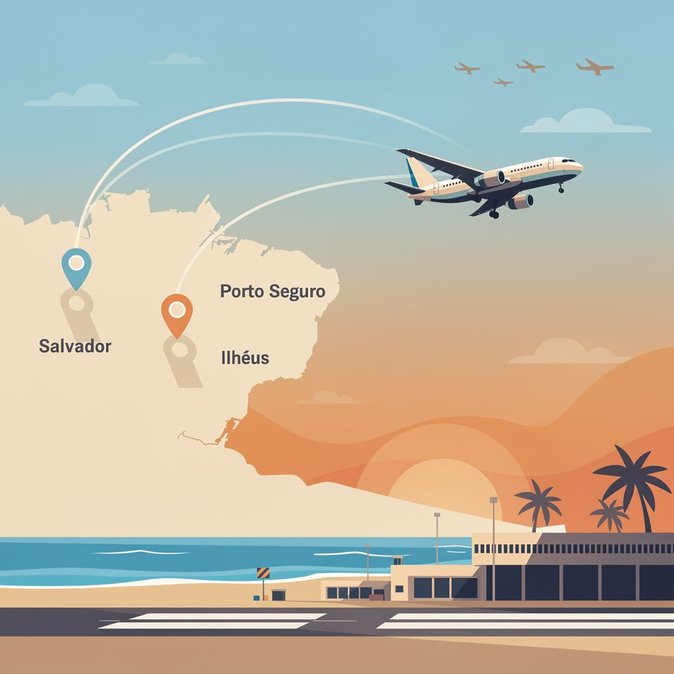
Brazilian carrier Azul has unveiled an aggressive high-season schedule that will bring an additional 780 flights—equivalent to roughly 115,000 seats—to three of Bahia’s busiest airports between 5 December 2026 and 14 February 2027. Salvador, Porto Seguro and Ilhéus will receive the bulk of the extra frequencies, linking the state to São Paulo’s Congonhas and Guarulhos hubs, Belo Horizonte (Confins), Recife and nine other domestic cities. Although the expansion is targeted at leisure demand, it carries practical implications for global-mobility managers. Many international assignees and project teams hub through São Paulo or Recife before making a domestic connection to industrial sites and renewable-energy projects along Bahia’s coast. Extra seats reduce the risk of capacity bottlenecks that can derail project timelines during Brazil’s peak holiday period, when domestic tourism typically absorbs spare inventory. Azul’s network planners say the Bahia add-on is part of a 2,500-flight national build-up that will inject some 370,000 seasonal seats. The Northeast alone accounts for 90 percent of the additions, reflecting the region’s surging popularity among both foreign tourists—whose spending just hit record levels—and domestic travellers seeking “second-summer” breaks after the Southern Hemisphere winter. Companies should still brace for price spikes: Azul’s revenue-management team confirmed that dynamic fares will kick in once load factors breach 70 percent—a threshold often reached weeks before Christmas. Early ticketing for project staff and rotating crew is therefore strongly advised. Travellers transiting via Viracopos or Guarulhos should also allow for potential weather-related delays, as the rainy season coincides with the schedule ramp-up. On the policy front, state officials view the capacity surge as validation of recent airport-concession upgrades and are expected to fast-track incentives for additional international charters to feed into Salvador and Porto Seguro—moves that could further enhance connectivity for multi-country assignment programmes.
Source: Brasilturis