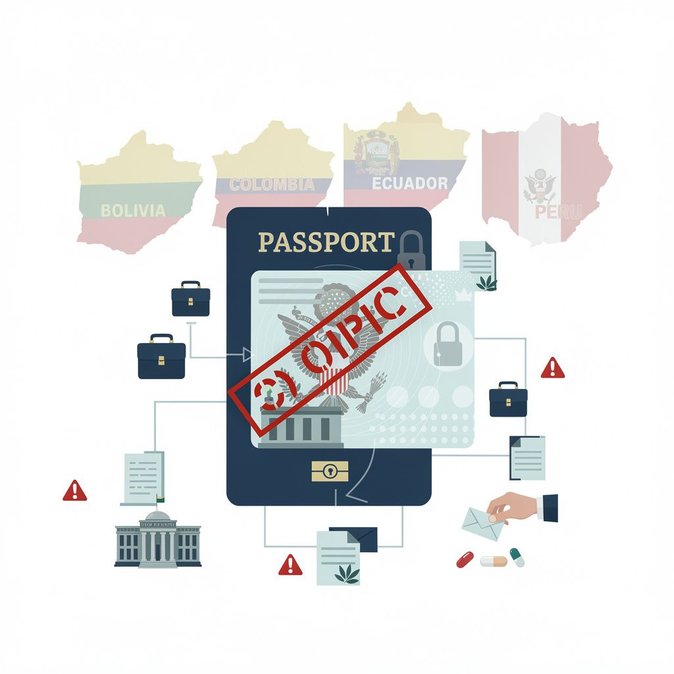
The State Department announced late on September 28 that it has revoked or will refuse to issue U.S. visas to 27 current and former officials from Bolivia, Colombia, Ecuador and Peru—together with some of their immediate family members—because of alleged involvement in high-level corruption and narcotics-related activity. Secretary of State Marco Rubio said the move upholds the Trump administration’s pledge to use travel bans and other sanctions to bolster the rule of law in the Western Hemisphere. Although visa‐based sanctions have long been part of Washington’s foreign-policy toolkit, the list’s size and the breadth of positions covered—ranging from Bolivia’s attorney-general to provincial judges—signal an increasingly aggressive posture. The action effectively bars the individuals from entering or remaining in the United States and can be expanded to freeze U.S.-based assets if Treasury chooses to designate them under the Global Magnitsky sanctions regime. For multinationals operating in the Andes, the designations create immediate compliance concerns. Companies must screen counterparties against the State Department’s public visa-ban list—expected within days—to avoid facilitating travel or immigration benefits that are now prohibited. The decision may also complicate cross-border investigations: U.S. courts regularly rely on the visa process to secure witness attendance, and exclusions could delay cooperation in transnational bribery or money-laundering cases. Practically, business travelers from the affected countries should anticipate heightened scrutiny at U.S. ports of entry, as Customs and Border Protection officers receive updated lookout records. Employers sponsoring L-1 or H-1B petitions for executives from the region may face additional document requests to confirm that applicants are unconnected to the barred officials. Diplomatically, the move underscores Washington’s willingness to combine immigration powers with foreign-policy objectives—an approach likely to surface in other regions where corruption and migration pressures intersect.
Source: Associated Press