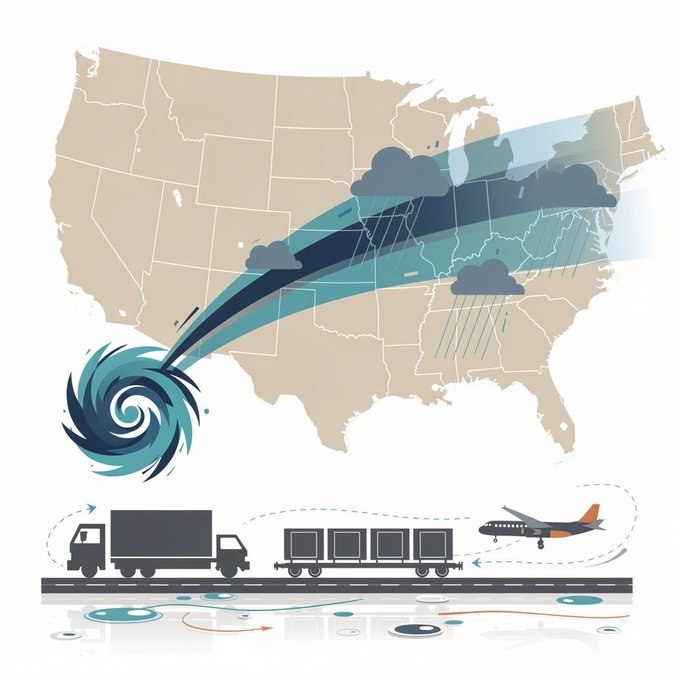
Just as the Northeast grapples with a nor’easter, mobility managers are turning their attention to the other side of the map. The Washington Post warns that the remnants of eastern-Pacific Hurricane Polo will funnel tropical moisture into Arizona, New Mexico and West Texas beginning Monday night before pushing into the central United States later in the week. Forecasters anticipate intense convective bands capable of dumping two to six inches of rain in desert catchments already saturated by an unusually wet monsoon. The National Weather Service has issued flash-flood watches for eleven states, and several regional carriers have published weather-impact waivers for Phoenix, Tucson and El Paso through Wednesday. For global corporations with manufacturing footprints in the Sun Belt, the logistics headaches could rival those seen during 2023’s tropical storm Hilary. Ground freight moving through I-10 and the Union Pacific rail corridor may face slow-orders or temporary closures, delaying critical components for just-in-time assembly plants. Cross-border trade at the Nogales and El Paso land ports could also be slowed if Customs and Border Protection redeploys staff to emergency operations. Employee-assignment programs are urging field engineers and project teams to confirm evacuation routes, ensure rental vehicles carry emergency kits and verify that corporate travel insurance covers storm-related delays. HR departments with remote-work flexibility are already authorizing virtual attendance for client meetings originally scheduled in Phoenix and Albuquerque. Although Polo will lose tropical status before entering U.S. territory, its moisture plume illustrates how far-reaching Pacific storms can be for inland mobility. Experts recommend that companies integrate flood-modeling tools and supply-chain visibility platforms to anticipate route-level impacts rather than relying solely on coastal hurricane monitoring.
Source: The Washington Post