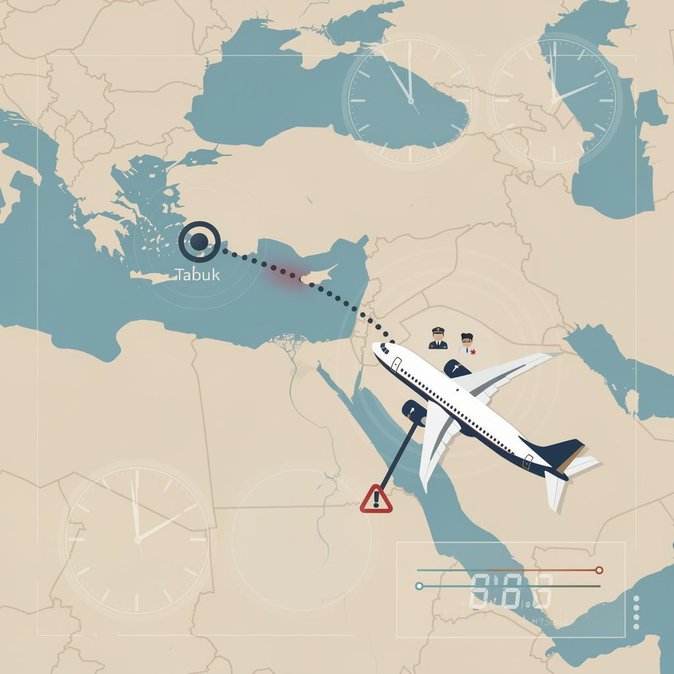
A routine flydubai service from Dubai International to Tel Aviv was forced to make an emergency landing at Tabuk Airport in north-west Saudi Arabia late on 30 September after experiencing a serious in-flight incident. Flight FZ1073, a Boeing 737 MAX 8, descended 14,000 feet in under 30 seconds before the crew declared a ‘7700’ general emergency followed by a ‘7500’ unlawful-interference squawk. Both pilots sustained injuries during the event and were transferred to hospital on arrival; all passengers were unharmed and later accommodated on a recovery flight. Details of the cause remain unconfirmed, but aviation analysts note the rapid altitude loss and transponder codes could indicate either a sudden cabin-pressure event or a security threat. The General Civil Aviation Authority has opened an investigation in coordination with Saudi and Israeli counterparts. Airlines operating over the northern Red Sea corridor have been advised to review contingency procedures but Dubai airspace remains open. The diversion highlights the operational complexity of regional routes amid elevated geopolitical tensions. Business travellers shuttling between the UAE and Israel—routes that have grown rapidly since the 2020 Abraham Accords—are urged to build additional buffer time into itineraries and to monitor carrier alerts closely. Travel-risk consultants also recommend enrolment in real-time tracking apps so duty-of-care teams can confirm staff safety in the event of diversions. For flydubai, the incident is the second high-profile disruption in a week after it suspended codeshares to Tel Aviv with partner Emirates due to security concerns. The low-cost carrier says safety remains its paramount priority and that it is cooperating fully with investigators. Depending on findings, insurers could increase hull-war premiums on Israel-bound flights, potentially raising ticket prices for corporates that rely on the corridor for tech-sector commuting and investment travel.
Source: Khaleej Times