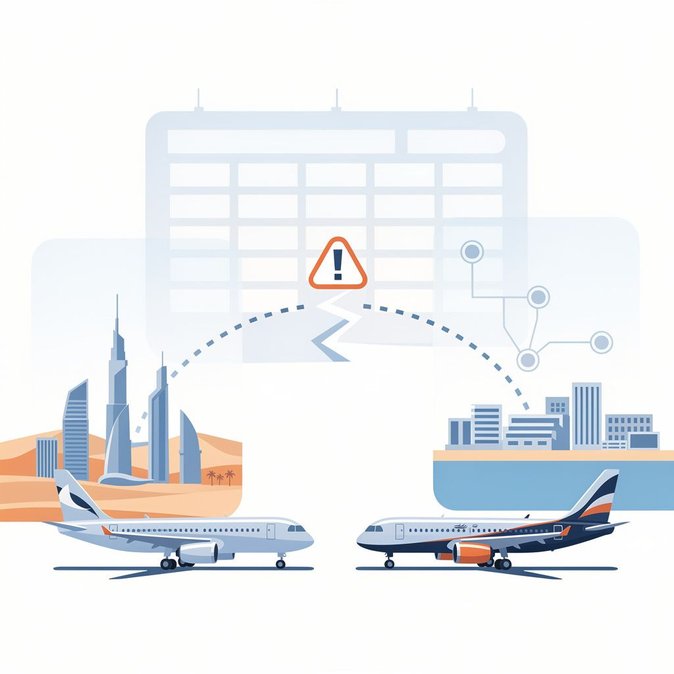
Passenger operations at both Dubai International (DXB) and Abu Dhabi’s Zayed International Airport faced a second day of disruption on 1 October as Flydubai confirmed an immediate suspension of all Tel Aviv services in the wake of the FZ1073 incident. Emirates followed suit, halting its daily EK-coded connections that are operated under a codeshare with Flydubai. Gulf News flight-boards showed at least eight Flydubai Tel Aviv rotations and their Emirates equivalents cancelled on Thursday, alongside delays to destinations as far afield as Moscow, Kathmandu and Naples. Aviation sources say aircraft utilisation has been thrown off-balance because Flydubai must park two 737-MAXs in Tabuk for forensic inspections, while crew scheduling has tightened after several pilots received mandatory medical leave. Corporate-travel managers are advised to re-route via Amman, Larnaca or Cairo, where airlines still maintain Israel feeders. Passengers with an Emirates ticket can claim a full refund or rebook onto an alternative destination within 14 days; Flydubai is lifting change-fee and fare-difference rules for Israel itineraries until 15 October. Longer-term business impact is significant: the Dubai–Tel Aviv corridor had grown to more than 70 weekly frequencies and was popular with tech start-ups and multinational executives commuting between the UAE and Israel’s ‘Silicon Wadi.’ Analysts warn that any prolonged closure could dent hotel occupancy in Dubai’s winter season and slow bilateral deal-making that relies on rapid point-to-point travel. The General Civil Aviation Authority (GCAA) says additional security screening has been introduced for flights departing to conflict-adjacent destinations, but insists “UAE airports remain fully operational.” Travellers should nevertheless arrive early and maintain contingency plans for last-minute gate changes.
Source: Gulf News