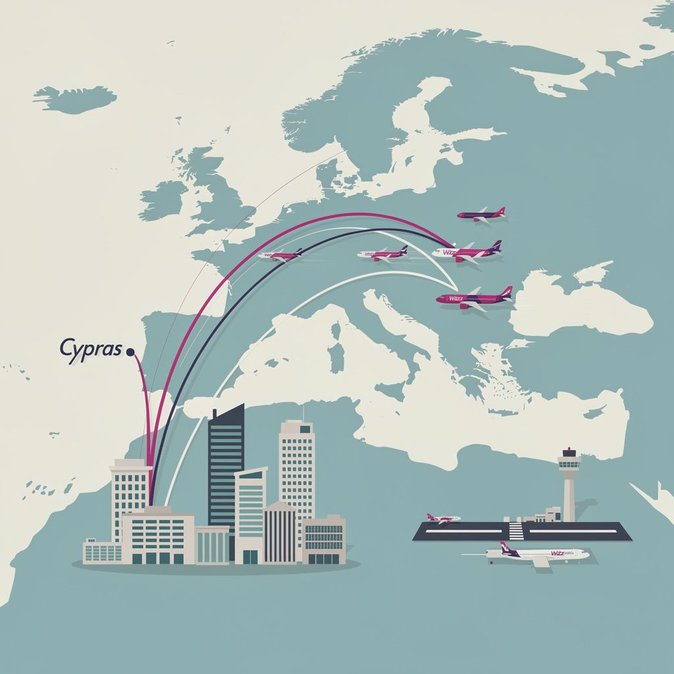
Low-cost carrier Wizz Air has made clear that last week’s inaugural Larnaca–Madrid connection is only the first step in a broader Cyprus growth strategy. In remarks released on 1 October 2026, network director András Szabó said the airline is “constantly assessing new opportunities” and sees “good potential for further development” out of its Larnaca base. The thrice-weekly Madrid flights—which went live on 24 September and already show load factors above 85 %—give Cyprus its second year-round link to Spain after Barcelona. One-way fares start at €55.99, including taxes and a cabin bag, positioning the service as an attractive option for both budget-conscious leisure travellers and price-sensitive SMEs. According to Hermes Airports, Spain is among the top five unserved markets for Cypriot outbound business travel, with financial-services and tech firms regularly sending staff to Madrid and Valencia. Szabó also confirmed that Wizz Air’s high-frequency Larnaca–Athens shuttle, relaunched on 23 September at 11 flights per week, will be ramped up to twice-daily frequencies next summer. The carrier is evaluating additional routes to Central Europe and the Middle East and plans to boost capacity on existing services to Barcelona, Thessaloniki and Yerevan. For companies managing expatriate assignments or regional sales teams, the growing network translates into greater scheduling flexibility and lower travel budgets. The expansion intensifies competition at Larnaca International Airport, where Cyprus Airways and easyJet are simultaneously adding frequencies to Rome, Munich and London. Travel-management companies report that corporate fares on the Larnaca–Athens sector have fallen by up to 18 % year-on-year as carriers jostle for market share. HR mobility managers should review preferred-supplier agreements to capture the new savings and update travel-policy caps accordingly. While additional routes will enhance connectivity, observers caution that Wizz Air’s rapid growth could strain slot availability during peak seasons and complicate contingency planning if operational disruptions occur. Businesses relying on the low-cost network for time-critical travel should continue to maintain back-up options on legacy carriers and monitor on-time performance data as new flights bed in.
Source: Cyprus-FAQ