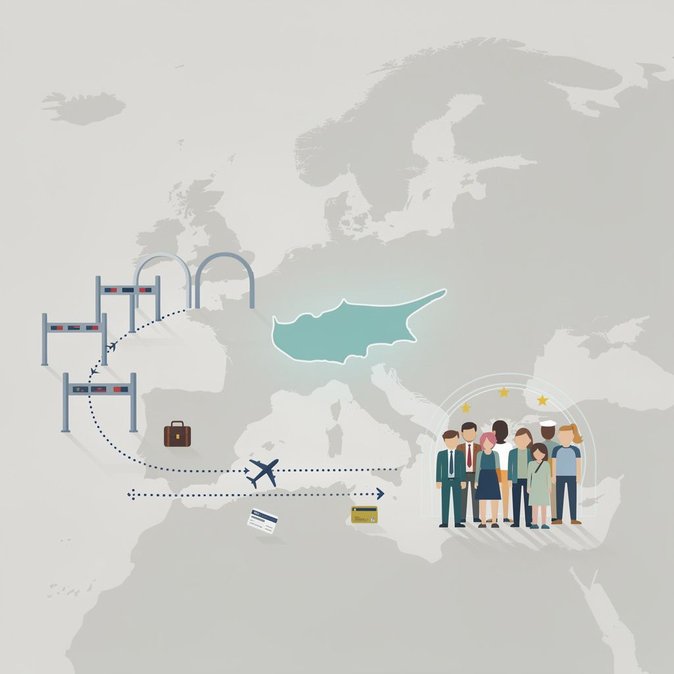
Cyprus has been working for more than a decade to meet the demanding security, data-protection and border-management standards laid down by the European Union’s Schengen acquis. Speaking on the sidelines of the EU Justice and Home Affairs Council in Luxembourg on 1 October 2026, Deputy Minister of Migration and International Protection Nicholas Ioannides announced that “all recommendations made by the Commission are now considered to have been implemented,” adding that the island “is ready to become a full member of the Schengen area” from a technical standpoint. The assessment covers every element of Cyprus’ external-border controls—from biometric verification hardware at Larnaca and Paphos airports to real-time connectivity with EU information systems such as the Schengen Information System (SIS), the Entry/Exit System (EES) and Eurodac. It also follows large-scale upgrades at the island’s main seaports and the Green Line crossings that bisect the capital, Nicosia. Brussels officials privately confirm that Cyprus has fulfilled the last outstanding requirement: full operational readiness of its Passenger Name Record (PNR) processing unit, which went live in mid-September. What remains is a political decision by the Council of the EU, which must vote unanimously to lift internal-border checks. Cyprus will now embark on a diplomatic road-show aimed at persuading sceptical member states—particularly those wary of secondary migration—to back its bid. Ioannides signalled that Nicosia is willing to sign bilateral cooperation protocols on returns and information-sharing to win support, and emphasised solidarity with frontline states dealing with “massive migratory flows.” For businesses, Schengen entry would be transformative. EU-based multinationals with regional hubs in Limassol’s fintech and shipping clusters could move staff in and out without passport control, trimming travel times and administrative costs. Airlines would be able to re-schedule Larnaca rotations as true intra-Schengen flights, allowing more flexible crew rostering. Hotels and conference organisers anticipate a measurable bump in corporate-travel demand, especially for short-notice trips that currently require identity checks on arrival. Yet challenges persist. Until political approval is secured, Cyprus must continue full border checks, and its Green Line will remain outside Schengen rules—a sensitive issue given the island’s division. Moreover, once inside the passport-free zone, Cyprus will have to apply Schengen visa policy in full, meaning tighter, uniform rules for third-country nationals who currently benefit from more liberal national visas. Companies employing British, U.S. or Israeli specialists on short projects should begin auditing assignment timelines to ensure compliance with the 90/180-day Schengen stay limit.