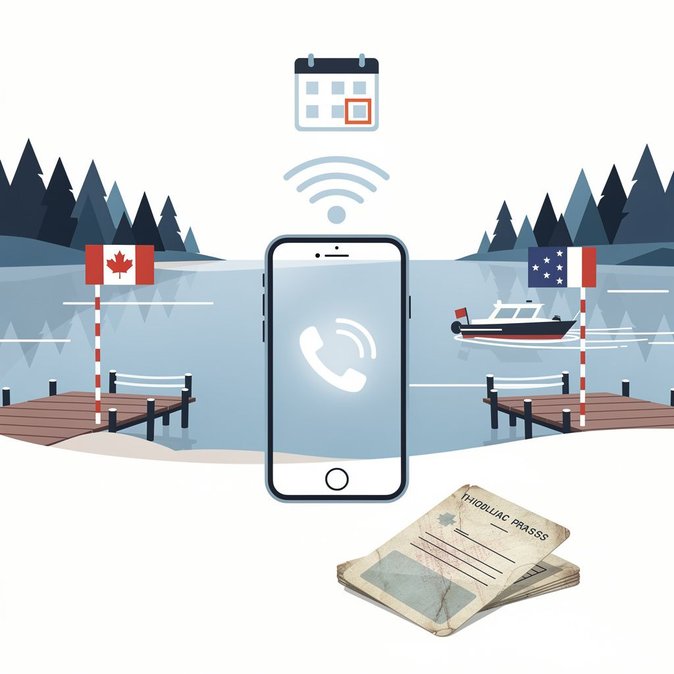
Travellers who rely on Canada’s Remote Area Border Crossing (RABC) permits have just two months left before the programme disappears. Updated guidance on the Canada Border Services Agency (CBSA) website confirms that all RABC permits will expire on 30 November 2026, after which entry through remote checkpoints in north-western Ontario and the Northwest Angle must be reported via the Telephone Reporting Centre. Under the new system, boaters, anglers and cabin owners crossing from Minnesota or northern inland U.S. waters will phone 1-888-226-7277 upon arrival at a designated site instead of simply carrying a laminated permit. The change standardises procedures already used at many small marinas across the country and, according to CBSA, “enhances border integrity while facilitating legitimate travel.” Permit holders who cross infrequently may find the impact minimal, but outfitters that shuttle guests daily will need to build call-in time into their logistics. Ottawa first signalled the shift in December 2025, citing gaps in data collection and enforcement. Industry groups pushed back, arguing that phone reporting would clog cell networks in wilderness areas. In August 2026 CBSA granted a brief extension so existing permits run to 30 November, but the agency now says the cut-off is final. Consultations on the placement of new telephone-reporting kiosks closed earlier this year. The move aligns Canada with U.S. Customs and Border Protection, which already requires boaters to check in by phone or app under the Small Vessel Reporting System. For Canadian businesses that cater to U.S. tourists, the key will be visitor education: failure to report can trigger fines up to CAN $1,000 and potential seizure of vessels. Travellers who still need RABC-style flexibility after December can apply for NEXUS, CANPASS or the broader CanBorder Boat programme, all of which rely on advance telephone or app reporting rather than physical permits.
Source: Canada Border Services Agency