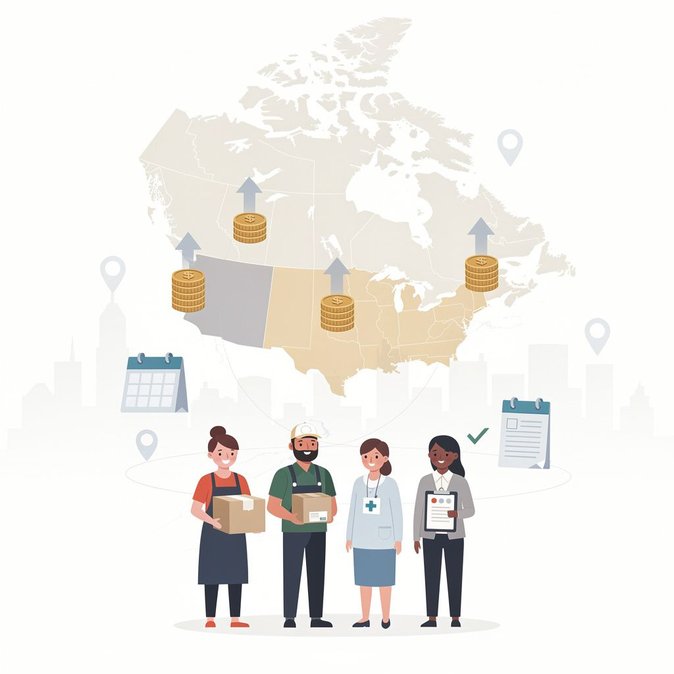
On 1 October 2026, Ontario, Prince Edward Island, Nova Scotia, Manitoba and Saskatchewan all implemented scheduled minimum-wage hikes ranging from 25 ¢ to 40 ¢ an hour. Ontario now leads at C$17.95, while Alberta, unchanged since 2018, lags at C$15. Although minimum-wage adjustments are not immigration policies per se, they have an outsized impact on newcomers: retail, hospitality and food-service jobs—sectors heavily staffed by international students and closed-work-permit holders—cluster around the legal floor. For foreign workers, the general provincial minimum wage applies regardless of immigration status, and Ontario’s Employment Protection for Foreign Nationals Act layers extra safeguards against fee-charging and passport seizure. Importantly, Ontario’s lower ‘student wage’ applies only to workers under 18 logging fewer than 28 hours during the school term; most international students therefore qualify for the full general rate. Global-mobility teams placing assignees in low-wage occupations must update payroll systems and secondment budgets immediately, especially where pay periods straddle 1 October—provincial rules deem such periods split, and any hours after the change must be paid at the new rate. The hikes also interact with federal immigration programmes: while the Temporary Foreign Worker Programme relies on median-wage thresholds rather than minimums, failure to meet the provincial floor can trigger Employment Standards investigations and jeopardise employer-compliance records critical for future Labour Market Impact Assessments. For talent-acquisition specialists, the widening gap between Alberta and its peers may influence settlement choices for entry-level foreign talent, particularly in service industries where take-home pay is a major draw.
Source: IRCC.com