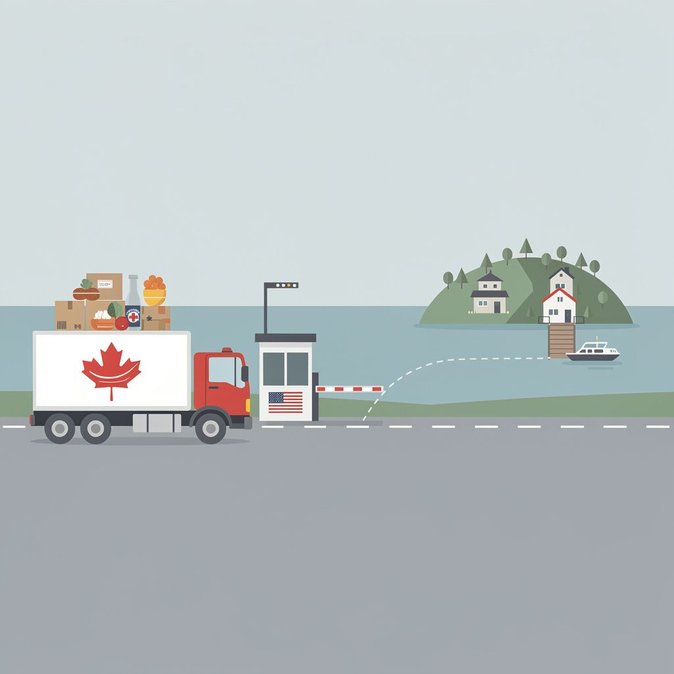
Residents of Campobello Island, New Brunswick—an isolated community accessible by road only through Maine—faced new uncertainty this week after U.S. border officers detained a Canadian truck carrying mail, milk and alcohol destined for the island. The truck was stopped at Calais, Maine, on September 30 under fresh U.S. rules that prohibit in-transit alcohol shipments, even when the goods are sealed and licensed by the Canada Border Services Agency. Local MP John Williamson called the halt "a sovereignty issue" and warned that future deliveries could be disrupted if the bilateral dispute over Canadian alcohol is not resolved quickly. The truck was eventually released after several hours, but the delay forced it onto a seasonal ferry—scheduled to shut down on October 12—to complete the journey. Campobello’s 1,000 residents depend on the daily truck for essential supplies because the island lacks both a grocery store and a gas station. During the COVID-19 pandemic, Ottawa and Washington granted the route special exemptions, but Williamson noted that the new rules appear to override those precedents. For supply-chain managers and courier firms that service remote Atlantic communities, the incident highlights the fragility of routes that transit a foreign jurisdiction. Contingency plans—such as re-routing via coastal ferries or chartering supply boats—may be needed if the regulatory standoff escalates. The federal government has not indicated whether it will seek a permanent domestic ferry link—an idea long championed by islanders—but Williamson argued that “this incident heightens the importance” of an all-Canadian route before winter weather cuts off marine options.
Source: CityNews / The Canadian Press