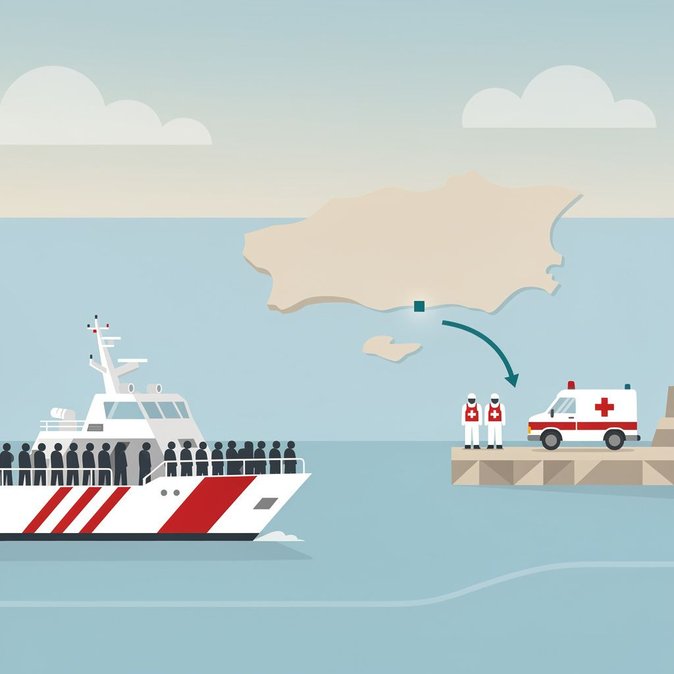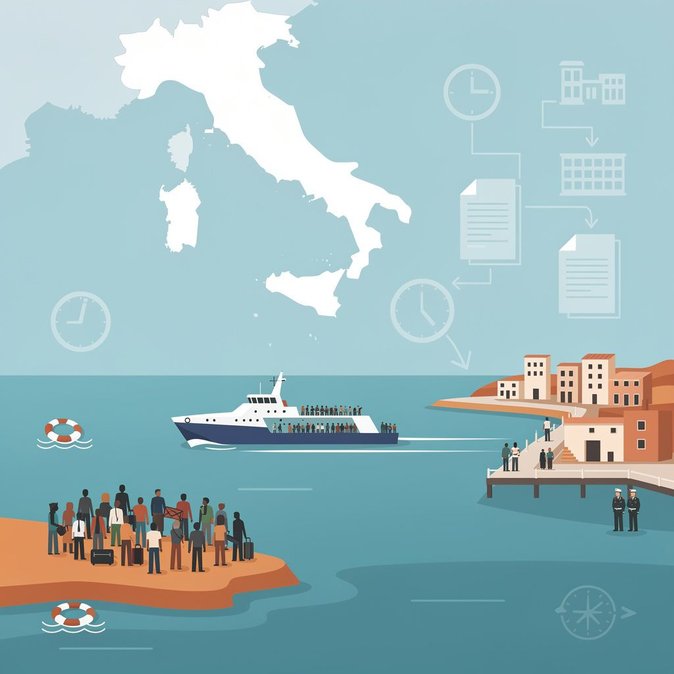
Italian authorities have transferred 172 asylum-seekers out of the Lampedusa reception centre in an overnight operation aimed at easing chronic overcrowding on the tiny island. The group—made up of Eritrean, Ethiopian, Nigerian, Pakistani, Somali and Sudanese nationals, including five women and a newborn—boarded the state-chartered ferry Sansovino on the morning of 4 October 2026 and is expected to reach Porto Empedocle this evening. The passengers include the 28 survivors of last week’s Hasdrubal oil-platform shipwreck between Libya and Tunisia, a tragedy in which six people, five of them children, remain missing. Lampedusa’s sole hotspot has been operating far beyond its official 400-bed capacity for most of the summer. Even after Sunday’s transfer, 178 people remained in the facility near Contrada Imbriacola, according to Interior Ministry figures. Local officials say the constant ebb-and-flow is straining medical services, ferry links and policing on an island whose year-round population is barely 6,000. The government’s strategy is to move new arrivals rapidly to mainland hubs where Eurodac fingerprinting, asylum interviews and relocation decisions can be handled more efficiently. Business-immigration specialists note that the bottleneck in Lampedusa still reverberates across Italy’s labour-migration system: until the hotspot pressure eases, police headquarters (Questure) divert resources away from work-permit renewals and EU Blue-Card processing. For companies moving staff through Italy, the practical takeaway is that any assignee requiring fingerprinting or conversion of a short-stay visa into a residence permit should budget extra time—especially if routed through Sicily. Employers should also be aware that the Interior Ministry assigns emergency charter flights at short notice; temporary closures of Trapani and Catania airports to handle humanitarian transfers have occurred twice in the past month. Looking ahead, Rome hopes that its new bilateral readmission protocol with Tunisia—scheduled to enter into force on 15 October—will reduce arrivals in the critical fourth quarter. Until then, corporates should stay alert for further ferry cancellations, ad-hoc flight diversions and possible protest actions by local residents.
Source: ANSA