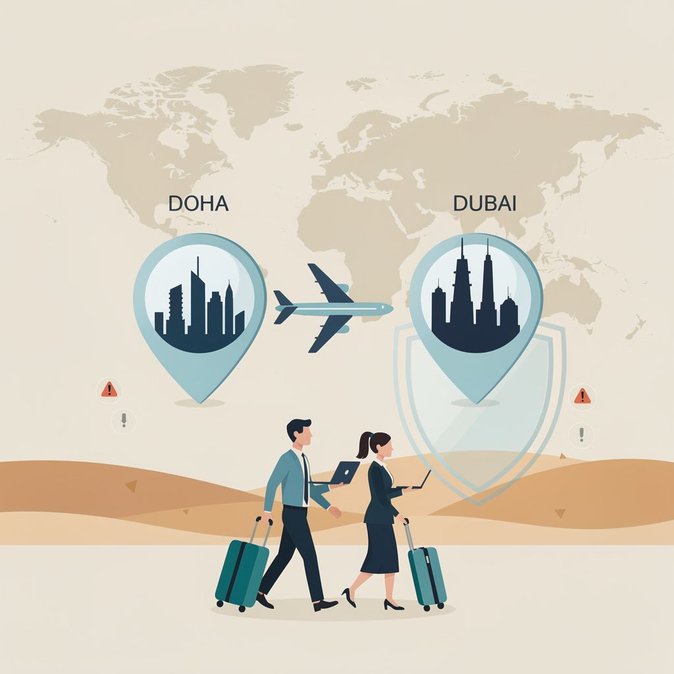
The Department of Foreign Affairs and Trade’s Smartraveller service has downgraded its advice for both Qatar and the United Arab Emirates (UAE) from Level 3 (“reconsider your need to travel”) to Level 2 (“exercise a high degree of caution”), signalling improved confidence in the Gulf region’s security environment. The move, published at 17:47 AEST on 8 October, immediately affects thousands of Australians transiting through Doha or Dubai on their way to Europe, Africa and South Asia. Travel industry giants were quick to respond. Melissa Elf, Global COO of FCM Travel and Corporate Traveller, told Travel Weekly that the shift “is a welcome sign of confidence for travellers and for the Gulf carriers that connect Australia to Europe and beyond,” but stressed that duty-of-care measures such as traveller tracking and flexible fares remain essential. From a corporate-mobility perspective, the downgrade reduces insurance premiums for many organisations, triggers automatic green-lighting in travel-approval tools and may unlock pent-up demand for in-person client visits in the Middle East. However, Smartraveller’s bulletin still warns that airspace closures and flight cancellations can occur with little notice and that regional tensions remain elevated—particularly around Iran and the wider Gulf. Risk-management teams are therefore advising business travellers to maintain contingency plans, verify that insurance covers sudden advice changes and monitor carrier schedules closely. Companies with fly-in fly-out operations to offshore energy projects in Qatar, or construction supervision in the UAE’s free-trade zones, stand to benefit most from the lowered advisory level. Six nearby countries, including Bahrain and Saudi Arabia, remain at Level 3, while Iran and Lebanon stay at Level 4 (“do not travel”), underscoring the patchwork nature of Middle-East risk assessments.
Source: Travel Weekly