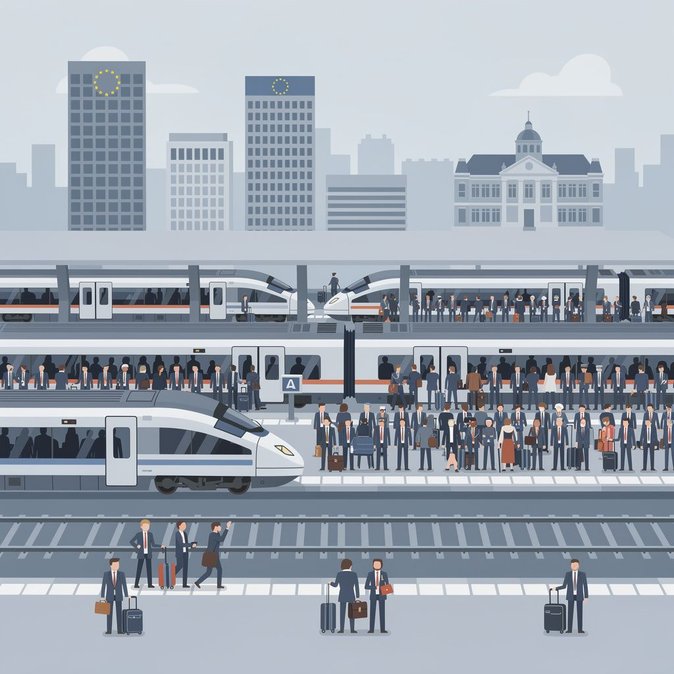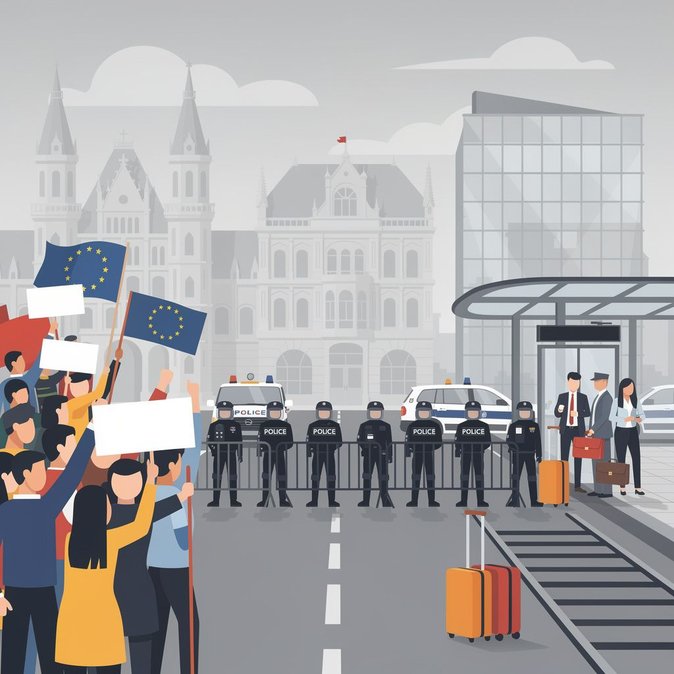
While most attention focused on airport and rail disruption, a parallel anti-austerity rally drew an estimated 30,000–50,000 participants to central Brussels, with a fringe group clashing with police outside Gare Centrale. The Associated Press reports that riot units deployed tear-gas and water cannon after masked protesters set fire to bikes and e-scooters. The unrest forced temporary closures of Rue de la Loi and surrounding arteries, delaying Euro-6 taxi transfers from EU institutions to hotels and to Brussels-Midi station. Several corporate security teams issued “shelter-in-place” advisories, underscoring how civil-society actions can ripple into mobility planning even when they are not transport-specific. Although the main union march remained largely peaceful, the clashes added complexity to an already strained urban network suffering from strike-induced service reductions. Travellers scheduled to cross the city between meetings found journey times doubling, and some ride-hailing apps applied surge-pricing multipliers above 2.0. Local authorities lifted most cordons by mid-afternoon, but warned of further flashpoints if negotiations over government budget cuts stall. Mobility managers should monitor city-police feeds and build contingency walking routes between the EU Quarter and major rail hubs.
Source: Associated Press