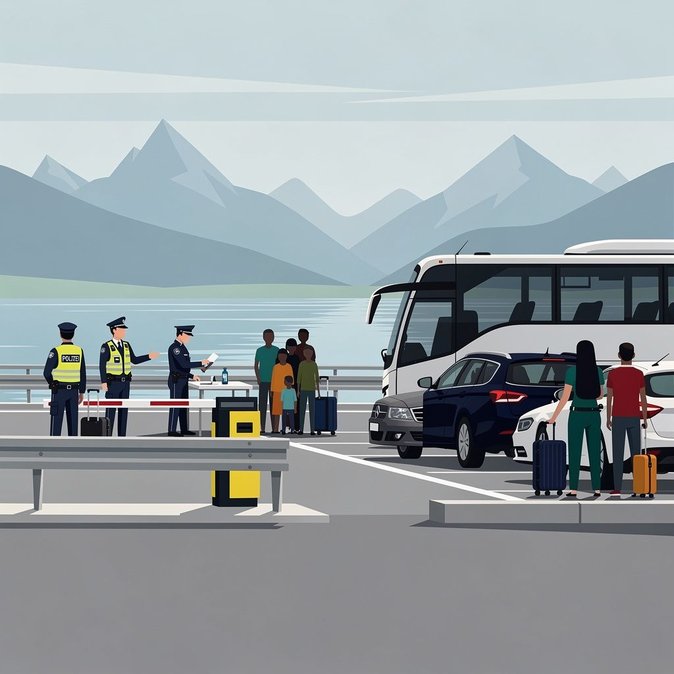
The Federal Police Directorate Munich reported on 8 October that officers intercepted twelve migrants in separate incidents at the Hörbranz/Lindau motorway crossing, on a Milan–Białystok coach and at Lindau-Reutin railway station. Those stopped included an Afghan family of five, three Kosovar men with expired Italian permits, a Sri-Lankan whose Romanian card had been revoked and an Iranian rail passenger with no valid papers. All were refused entry and, in one case, a forged Afghan ID was seized. The sharp spike illustrates how people-smuggling routes have shifted westwards since Austria tightened checks at the Brenner Pass. Smugglers are routing clients through northern Italy into Austria and then onto Bavaria via budget coaches. Police say the family paid €4,000 for the journey to Milan. Under Germany’s prolonged internal-border regime, officers can conduct spot checks up to 30 kilometres inside the frontier. Employers in the cross-border Bodensee region should expect more roadside delays for staff with third-country passports and advise them to carry residence cards at all times. The incident also raises questions about coach-operator liability. Under EU Regulation 562/2006, carriers that knowingly transport undocumented migrants face fines of up to €3,000 per person. Compliance teams should audit supplier contracts to confirm ID-check procedures.