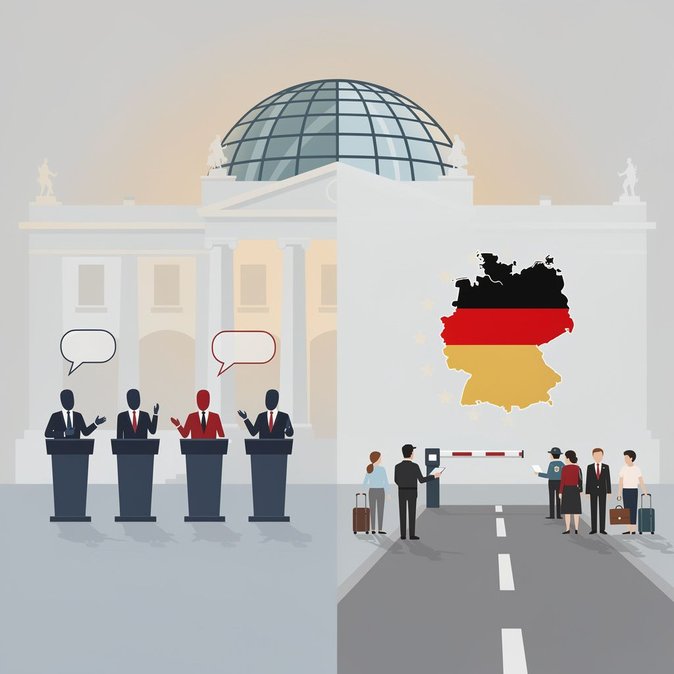
Germany’s migration and asylum policies once again dominated the plenary agenda in Berlin after the far-right Alternative für Deutschland (AfD) tabled a motion demanding a “Migrationswende” (migration turnaround). During the 100th sitting of the 21st Bundestag on 9–10 October 2026, AfD MP Gottfried Curio accused the three-party governing coalition of “destroying the country” through what he described as uncontrolled immigration. Government and opposition parties pushed back hard. Christian-Democrat (CDU) rapporteur Philipp Seif argued that the coalition has already delivered a course-correction by extending temporary controls at all of Germany’s Schengen land borders, beefing-up returns of rejected asylum seekers and sharply reducing new asylum claims in 2026. Green MP Filiz Polat retorted that the AfD’s proposals would shred the German constitution and EU law, while the Left Party’s Clara Lemke called the initiative “openly xenophobic”. Although the motion was referred to committee with no chance of passage, the debate matters for globally mobile companies and their employees. It frames the political battle lines ahead of Germany’s 2027 federal election and signals that stricter border checks and administrative vetting could remain in place well into next year. Employers moving staff across EU internal borders should therefore continue to plan for spot passport inspections, longer processing times at Ausländerbehörden (foreigners’ offices) and a politicised public discourse on work visas and family reunion. At the same time, the governing coalition emphasised that skilled-migration reforms adopted earlier in 2026—such as lower Blue-Card salary thresholds and the new Opportunity Card for jobseekers—remain intact. HR managers should continue to leverage these channels, while monitoring whether additional parliamentary skirmishes slow the issuance of residence permits at state level. Finally, companies should prepare for reputational considerations: international assignees may ask about Germany’s political climate, especially in sectors reliant on non-EU talent. Proactive communication that distinguishes hardening rhetoric from day-to-day immigration practice will help maintain talent pipelines.
Source: Deutschlandfunk