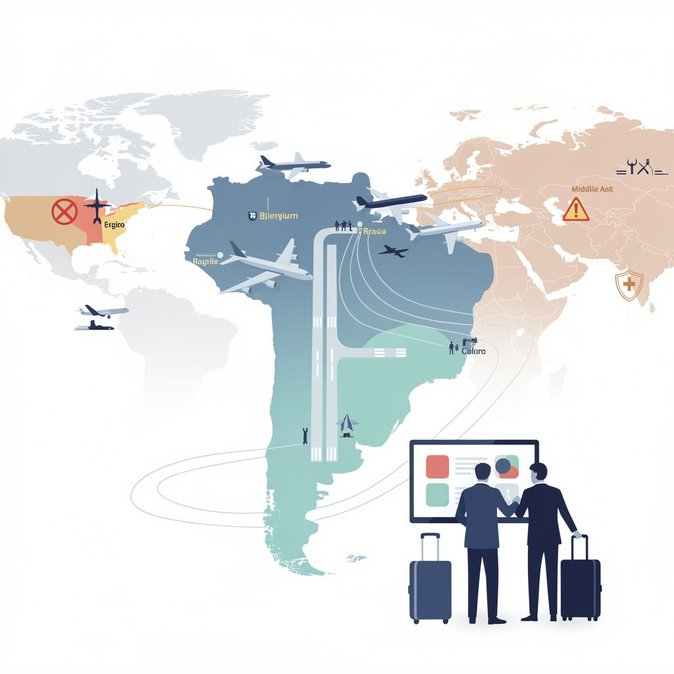
The Our Lady of Aparecida holiday is traditionally one of the busiest long-weekends for domestic tourism and business-leisure (“bleisure”) travel inside Brazil. In an advisory issued at 10:26 a.m. Brasília time on 12 October, the National Meteorology Institute (INMET) placed almost every region of the country under a yellow or orange severe-weather alert, warning of squall lines, electrical storms and torrential downpours. The heaviest rains are forecast for the western parts of Mato Grosso do Sul, Paraná, Santa Catarina and the northern half of Rio Grande do Sul, but isolated thunderstorms are also expected around São Paulo, Rio de Janeiro and the Triângulo Mineiro. INMET’s bulletin coincides with peak outbound traffic from the major metropolitan areas as Brazilians take advantage of the three-day break. Airport operators told Agência Brasil that they had activated contingency plans that include additional stand-by crews, remote de-icing equipment at southern terminals and closer coordination with airlines’ operations control centres. São Paulo-Congonhas (CGH) and Rio de Janeiro-Santos Dumont (SDU) – both downtown airports with short runways – are considered especially vulnerable to wind-shear go-arounds and low-ceiling diversions. Carriers have asked passengers to monitor apps and SMS alerts for last-minute gate changes or cancellations. Ground transport faces similar challenges. The federal highway police (PRF) has advised motorists on the BR-101 and Via Dutra corridors to avoid the late-afternoon return window on Monday, when convection-driven rainfall could reduce visibility to less than 500 metres and trigger stop-and-go traffic. Long-distance coach operators have re-timed some overnight services from Rio and Belo Horizonte in order to keep drivers within regulated duty-time limits should delays occur. For mobility managers, the alert raises several practical issues. Companies with field technicians and sales teams on the road are reviewing duty-of-care protocols, ensuring that travellers have hotel guarantees in secondary cities should diversions strand them overnight. Freight forwarders are also watching the southern corridors closely; any flooding of the BR-290 near Uruguaiana (the main Argentina–Brazil truck crossing) could cascade into port congestion in Rio Grande and Santos later in the week. Although Brazil’s aviation regulator ANAC has not yet issued a formal irregular-operation (IROPS) directive, airlines remain bound by Resolution 400, which obliges them to offer re-accommodation or refunds after four hours of delay. Given the breadth of the weather system, experts expect a sharp spike in voluntary ticket changes, putting further strain on call-centre staffing. Travellers are being urged to use self-service channels where possible to avoid lengthy hold times.
Source: Agência Brasil
How VisaHQ can help
VisaHQ simplifies the visa application process for individuals and businesses. Check current travel requirements, prepare the required documents and manage your application online through the VisaHQ Brazil portal.More From Brazil
View all
Passenger complaints spike as GOL cancels October flights; ANAC consumer rules under spotlight

Brazil’s Nossa Senhora Aparecida Holiday Forces Nationwide Consular Shutdowns and Visa Service Suspensions