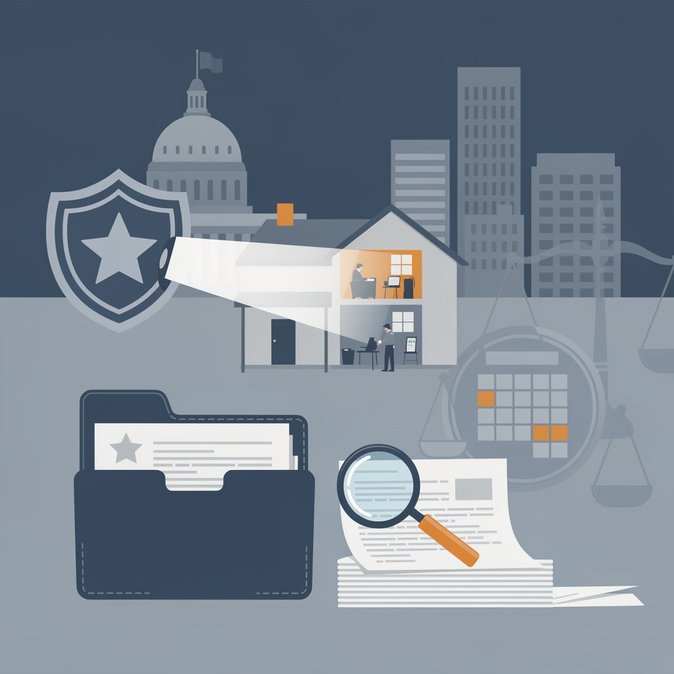
Federal agents with Homeland Security Investigations (HSI) executed a pre-dawn search warrant on October 12, 2026 at the Washington-area residence of Representative Ilhan Omar (D-MN) in connection with what the Justice Department described as “an ongoing criminal investigation into immigration fraud.” According to Axios, the warrant—signed by a federal judge—authorizes seizure of documents and electronic devices that may shed light on alleged irregularities in the congresswoman’s naturalization paperwork dating back to the mid-1990s, when she arrived in the United States as a Somali refugee. The raid marks an extraordinary step: it is rare for federal immigration authorities to target a sitting member of Congress, especially just weeks before a national election. Justice Department guidelines generally caution against investigative actions that could sway electoral outcomes, but officials told Reuters that *“the timing was driven by investigative necessity, not politics.”* Omar immediately denounced the operation as a “weaponization of law-enforcement,” accusing President Trump of using DHS to intimidate political opponents and Minnesota’s Somali community. House Democratic leaders echoed that charge, calling the search “an unprecedented abuse of power.” The White House countered that “no one is above the law,” emphasizing that HSI routinely investigates suspected immigration fraud, including high-profile cases. Practically, the raid does not itself amount to criminal charges, but it heightens legal and reputational risks for the three-term legislator. If prosecutors ultimately allege fraud or perjury in the naturalization process, Omar could face criminal penalties and potential denaturalization—an outcome with profound implications for any immigrant public official. For employers who sponsor foreign talent, the case is a stark reminder that USCIS and HSI can revisit decades-old filings, and that errors—intentional or otherwise—may be treated as fraud. Companies should review historical I-9, H-1B, and green-card records for consistency. More broadly, the episode underscores the Trump administration’s willingness to deploy immigration-enforcement tools against political adversaries. Multinationals with globally mobile executives should expect increased vetting of high-profile applicants and be prepared for heightened media scrutiny when immigration intersects with politics.
Source: Axios