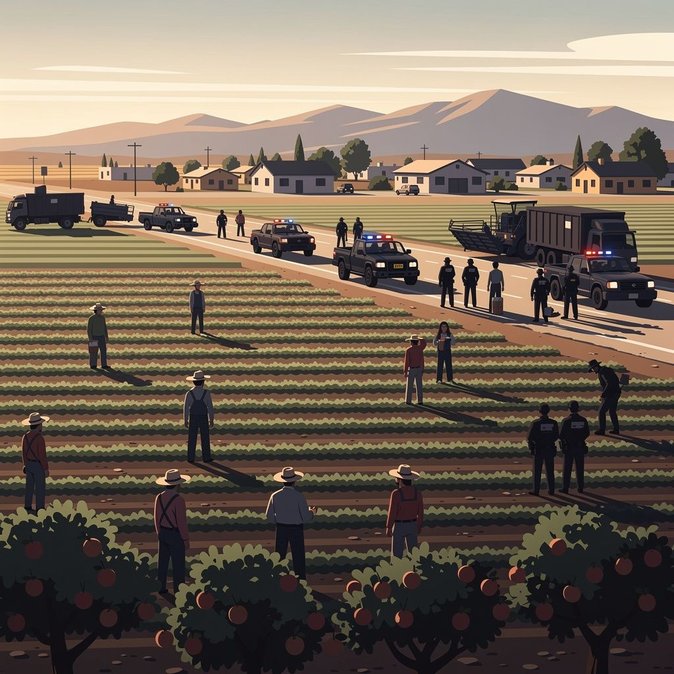
Immigration and Customs Enforcement (ICE) officers have arrested at least 100 non-citizens across California’s San Joaquin Valley during a three-day operation that concluded late Sunday, Documented NY’s Early Arrival newsletter reported on October 12. The coordinated sweep—confirmed by local advocacy groups and multiple news outlets—targeted farm towns from Fresno to Bakersfield, an area heavily dependent on seasonal migrant labour. Community organisations such as the Coalition for Humane Immigrant Rights (CHIRLA) say the raids began before sunrise on Friday, with plain-clothes agents using unmarked vans and mobile fingerprint readers. Many of those detained were long-term residents with U.S.-born children; several had outstanding removal orders but no criminal convictions. ICE’s San Francisco field office declined to provide numbers but said in a statement that the agency “prioritises public-safety threats.” For employers, the timing is disruptive. October is peak harvest for Central Valley table-grape, nut, and citrus growers, and the detentions threaten to worsen an already acute labour shortage. Agricultural associations told local media they are urging members to review I-9 compliance and consider contingency plans, including possible H-2A petitions, to stabilise the workforce. Politically, the sweep illustrates the administration’s pivot from border to interior enforcement after record apprehensions earlier this fiscal year. California sanctuary-city policies limit cooperation, so ICE has increasingly relied on large-scale field operations. Immigration counsel advise companies that even in sanctuary jurisdictions, workplace raids remain possible, and that failure to produce Form I-9s within three business days can trigger civil fines topping US $2,500 per employee. Advocates are organising rapid-response hotlines and Know-Your-Rights trainings; several legal-aid groups are preparing habeas petitions alleging due-process violations. Expect federal litigation challenging the operation’s breadth, and watch whether ICE uses electronic surveillance (e.g., license-plate readers) that could raise privacy issues for bystanders and employers alike.
Source: Documented NY