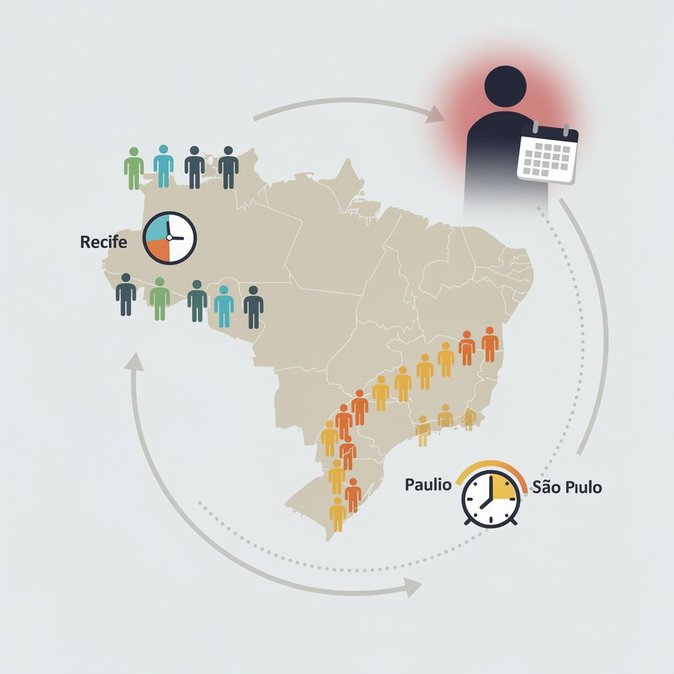
Brazilians planning trips to the United States received rare good news this morning: the independent tracking site Netvistos shows that the Recife Consulate has overtaken Brasília as the post with the shortest queue for B-1/B-2 (business-tourism) visas. Data scraped at 09:00 BRT on 15 October indicate an average wait of 16 days for the interview stage in Recife, compared with 28 days in Rio de Janeiro, 32 days in Brasília and a hefty 114 days in São Paulo. Biometric-only CASV appointments remain widely available nationwide within seven to eleven days. The numbers are not official—only the US Department of State publishes authoritative figures—but Netvistos’ twice-daily snapshots have become a bell-wether for corporate mobility managers. Compared with mid-September, São Paulo’s interview queue has lengthened by two weeks, while Brasília and Porto Alegre have shaved off roughly ten days each, reflecting shifting staffing levels and post-holiday demand. For multinationals moving staff between Brazil and the United States, the divergence underscores the value of geographic flexibility. HR teams can now steer urgent travellers to Recife or Rio, provided company policy allows domestic positioning flights and overnight hotel stays. The cost trade-off is usually favourable: a last-minute round-trip to Recife from São Paulo averages R$1,200, far less than the revenue lost waiting three extra months for a local slot. Practically, applicants should still schedule the earliest date available—then monitor the portal for openings caused by cancellations. Interview-waiver renewals remain the fastest lane; São Paulo shows next-day CASV availability for drop-off cases. Netvistos cautions that times fluctuate hourly as the system auto-releases batches of slots. Companies are reminded that buying or selling appointments violates consular rules and can trigger a visa refusal. While the State Department has not issued an official bulletin for October, embassy officials told trade groups last month that additional temporary staff would be assigned to Brazil’s busiest posts through year-end. If implemented, that could ease São Paulo’s backlog before the January conference season, when demand traditionally spikes.
Source: Netvistos