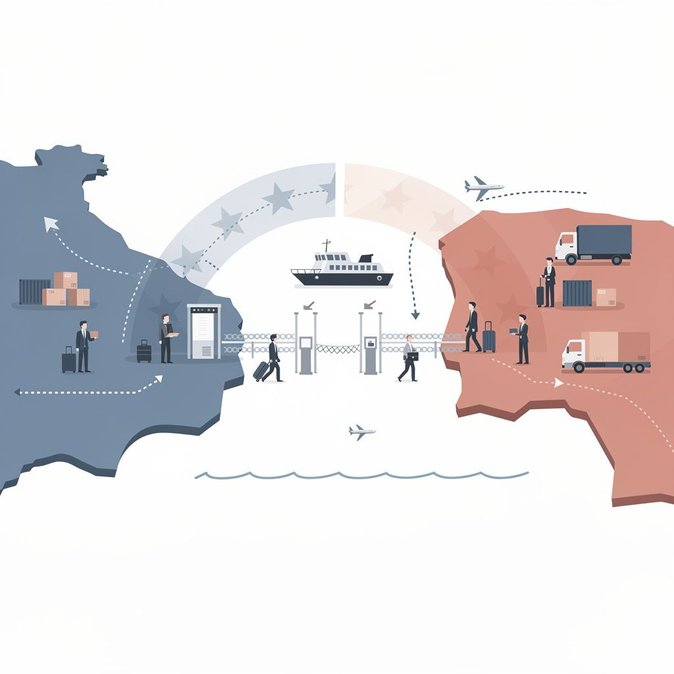
Foreign Minister Antonio Tajani told reporters in Brussels this morning that Rome will decide “in the next few hours” whether to renew temporary controls at the Italian-Spanish internal Schengen border, a measure due to expire at midnight. The checks, first introduced on 1 August after the Ceuta migration crisis, require travellers on Italy-Spain air and sea routes to show identity documents and, in some cases, proof of accommodation or return tickets. Tajani stressed that the Interior Ministry’s risk committee is still assessing the terrorism threat and the potential for secondary movements from Morocco into Spain and onwards to Italy. “Security comes first,” he said, adding that Spain had already indicated it would mirror any Italian decision. His counterpart Fernando Grande-Marlaska confirmed Madrid is prepared for a “symmetric extension”. The dual measures have complicated travel for businesspeople on the busy Rome-Madrid corridor. Airlines advise passengers to arrive at least 45 minutes earlier, while logistics firms report delays of up to 24 hours for just-in-time freight transiting through Barcelona-Genoa ferries. The Italian Foreign Trade Association estimates additional compliance costs of €2.7 million over the past 10 weeks. Under Schengen rules, internal border controls can only be prolonged for six months, meaning both governments must either lift the checks by 31 January 2027 or seek an exceptional Council authorisation. Mobility planners should therefore prepare for rolling two-week renewals until a political solution to the Ceuta fallout is reached. Companies relocating staff between the two countries should brief travellers on document requirements, double-check 90/180-day Schengen limits for non-EU employees, and consider routing cargo via France to avoid inspections. Tajani’s comments indicate no immediate relief is in sight.
Source: ANSA