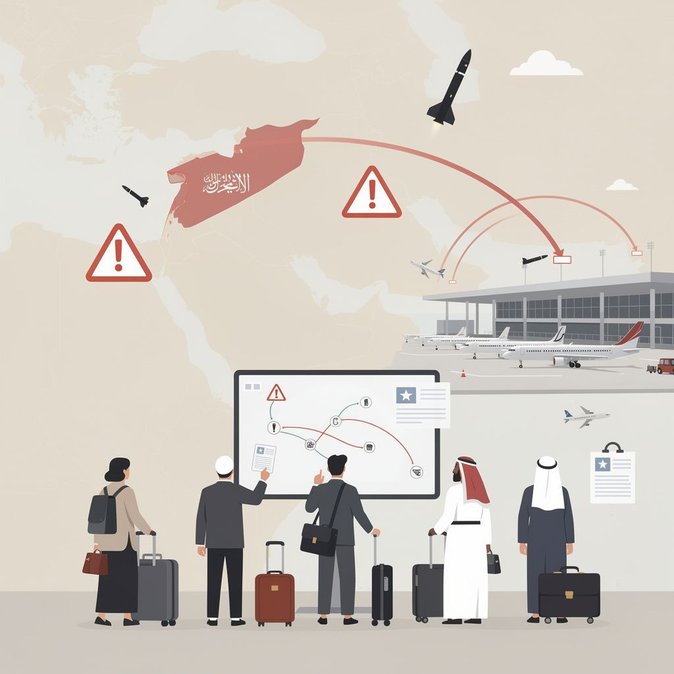
The Department of Foreign Affairs and Trade’s Smartraveller portal pushed through an unusual cluster of advisory changes overnight, updating guidance for Albania, Guam, Indonesia, Kenya, Saudi Arabia and Singapore — all dated 16 October 2026. The most severe shift was for Saudi Arabia, elevated to ‘Do not travel’ amid escalating regional tensions and a recent drone attack on oil infrastructure in the Eastern Province. The warning notes that commercial flights could be suspended at short notice and urges Australians in-country to consider leaving by commercial means while they remain available. Indonesia’s overall advice level remains ‘Exercise a high degree of caution’, but DFAT added new security notes for Papua and West Papua provinces after a surge in armed clashes. Travellers heading to Bali for upcoming school-holiday periods are advised to register their details and monitor local media for volcano or extreme-weather disruptions. Guam and Albania both moved down from ‘Reconsider your need to travel’ to ‘Exercise normal safety precautions’ following improvements in health-care capacity and political stability assessments. Kenya, by contrast, was edged up to ‘Exercise a high degree of caution’ due to a rise in violent crime in Nairobi and Mombasa. Singapore retained its lowest-risk category, but the bulletin now highlights the city-state’s new electronic arrival card, replacing paper forms from 1 November. For mobility managers, the refresh means that any corporate itineraries touching Saudi Arabia now require executive sign-off under most Australian duty-of-care frameworks. Travellers to Indonesia should confirm insurance coverage for higher-risk provinces, while organisations with regional Asia-Pacific footprints may need to adjust automated pre-trip approval systems to accommodate the new Singaporean e-arrival process.
Source: DFAT Smartraveller