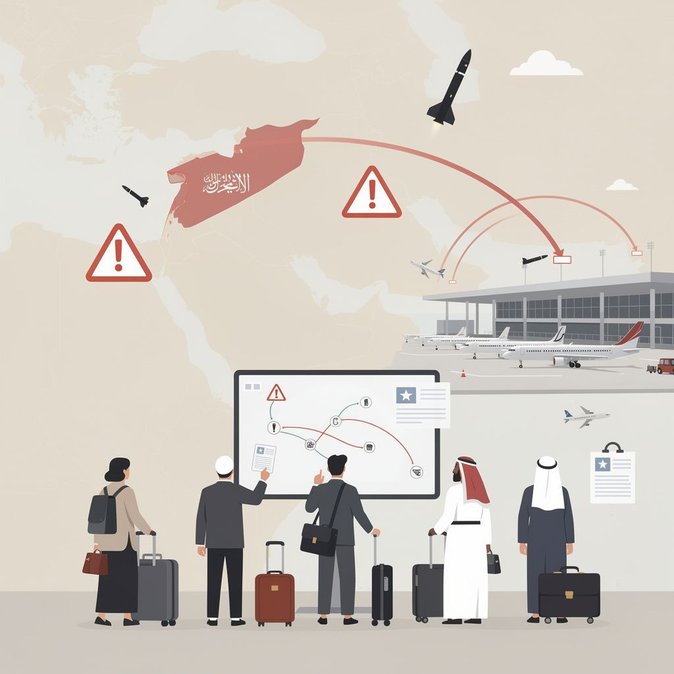
Australia’s Department of Foreign Affairs and Trade (DFAT) has dramatically escalated its Smartraveller advice for Saudi Arabia, moving the entire country to its highest warning level – “Do Not Travel” – after an overnight review dated 16 October 2026. Officials cite an increasingly volatile security environment, including repeated drone and missile threats against Saudi airports and airspace, and the potential for sudden closures of King Khalid International in Riyadh and other major hubs. The bulletin urges Australians already in the kingdom to prepare to shelter in place and to avoid all non-essential movement, particularly around critical infrastructure. Travellers planning the annual Umrah or Hajj pilgrimages are told to postpone trips until conditions stabilise. Airlines have begun cancelling and delaying services with little notice; DFAT warns passengers not to proceed to any Saudi airport without reconfirming flights and suggests considering over-land transport to hubs in the UAE or Qatar where feasible. For global mobility managers, the upgrade has immediate implications. Companies with fly-in-fly-out technicians on energy or infrastructure projects must activate contingency plans, including remote working or evacuation to neighbouring states. Travel insurers typically void coverage when a Level 4 advisory is issued, exposing employers to potentially significant duty-of-care liabilities if staff remain in-country. Expatriate families should review emergency supplies and communication trees, and ensure passports and exit permits are up to date. The move also highlights an emerging regional risk profile: DFAT’s Middle-East conflict update notes the possibility of further strikes on transport nodes across the Gulf. Multinationals routing workers through Riyadh for onward connection to African or European worksites may now need to rebuild itineraries via Dubai, Doha or Muscat, adding both cost and transit-time. While the advisory is subject to ongoing review, DFAT stresses consular assistance could be severely limited if conflict escalates. Corporations are therefore urged to register Australian staff on Smartraveller, maintain real-time location tracking, and brief employees on stringent local laws against photographing military activity. Failure to adapt programmes quickly could leave HR and travel teams scrambling should the situation deteriorate further.
Source: DFAT Smartraveller