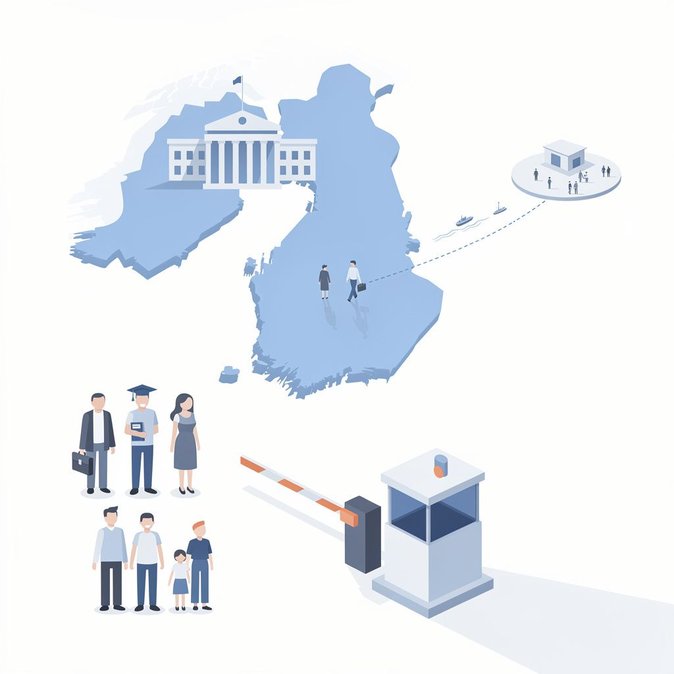
Finland’s centre-right National Coalition Party (NCP) parliamentary group published a 40-page immigration programme on Friday, 16 October 2026 that would radically reshape the way Finland handles humanitarian and labour inflows. Presenting the document in Parliament, working-group chair Atte Kaleva (NCP) said the proposals translate the new EU Pact on Migration and Asylum into “practical Finnish solutions”. The most far-reaching measure is a call to move the registration and examination of asylum claims from Finland to reception and return centres located in ‘safe third countries’ outside the EU. Under the model, anyone arriving in Finland to seek protection would be transferred to the external centre to await a decision. Kaleva argued that this would undercut the smuggling business and deter dangerous irregular journeys to Europe. The party says it is already exploring a joint Nordic pilot facility. Domestically, the programme puts sharper conditionality on migrants’ access to social security. Unemployment benefits and housing allowances would be linked to time worked in Finland, and family-reunification rules would be tightened by raising language and income thresholds. At the same time, the NCP stresses the need for “selective immigration” that actively attracts high-skilled employees through faster work-permit processing and tax incentives, reflecting companies’ concerns about labour shortages in technology and health care. Although the plan is only a party position, it matters: the NCP leads Finland’s governing coalition and controls both the interior and finance ministries. Officials in those ministries confirmed on Friday that they will study which elements could be advanced by decree and which would require changes to the Aliens Act. Business groups greeted the skills-migration chapters positively, but NGOs warned that externalising asylum risks breaching non-refoulement obligations. The government aims to table concrete legislative proposals during the spring 2027 session, which means employers and global mobility managers should monitor how eligibility rules and processing locations may shift over the next 12 months.
Source: Verkkouutiset