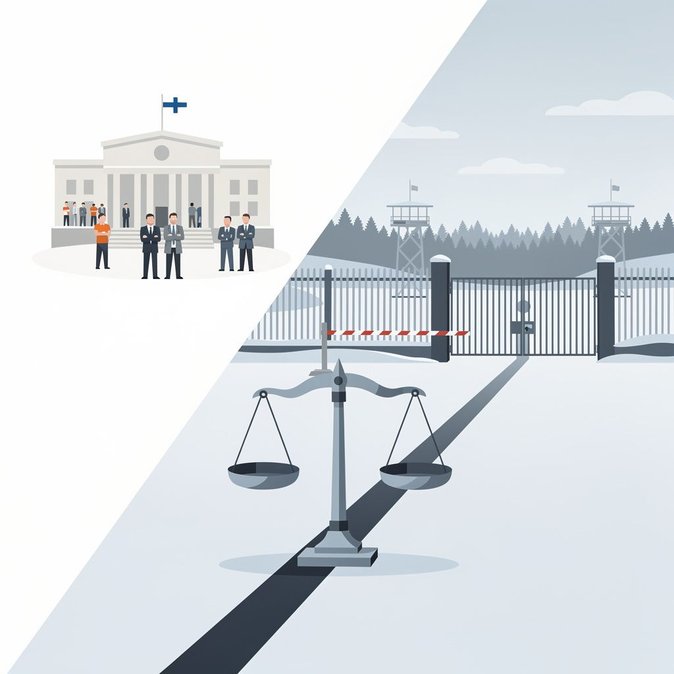
Finland’s controversial ‘käännytyslaki’—the emergency legislation that allows border guards to refuse entry to migrants attempting to cross from Russia—has returned to the spotlight. On 16 October 2026 the Parliament’s Constitutional Law Committee delivered its opinion on a government bill that would prolong the measure, first adopted as a temporary law in July 2024, until the end of 2028. While the committee majority found the extension admissible under ordinary legislative procedure, Green League MP Krista Mikkonen and Left Alliance MP Johannes Yrttiaho filed a dissenting opinion. They argue the law violates absolute human-rights norms, including the ban on refoulement, because it allows summary refusals without individual assessment. The lawmakers also criticised the government for normalising what was meant to be a short-term exception, noting that this would be the second—and longer—extension. Interior-ministry officials maintain the pushback powers are needed to counter “instrumentalised migration” by Russia. Since land crossing points on the eastern border were closed in December 2023, small numbers have attempted to enter through forested areas; the government believes hybrid tactics could resurface. For international companies, the debate matters because the pushback law forms part of a wider tightening of Finland’s border regime that can affect staff mobility between Finland and neighbouring Russia. If the bill passes unchanged, corporate security teams should expect continued strict controls and the possibility of rapid policy shifts whenever authorities perceive hybrid pressure.