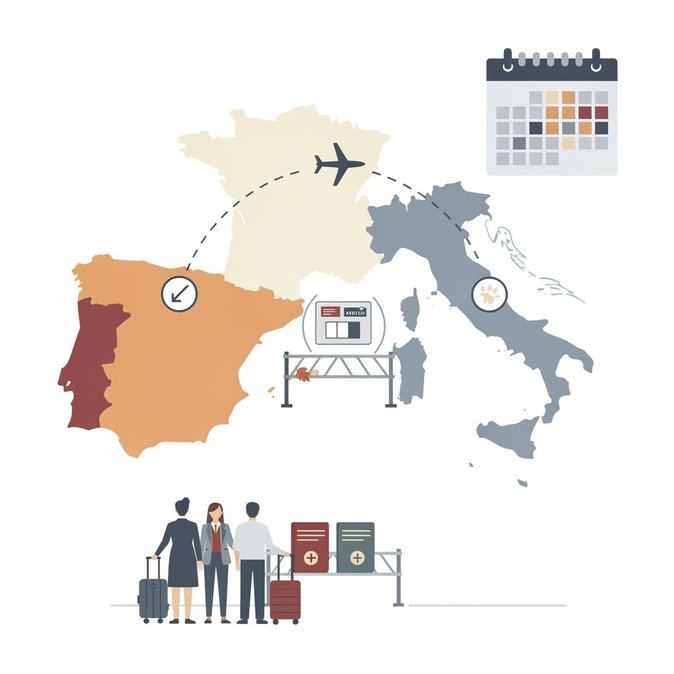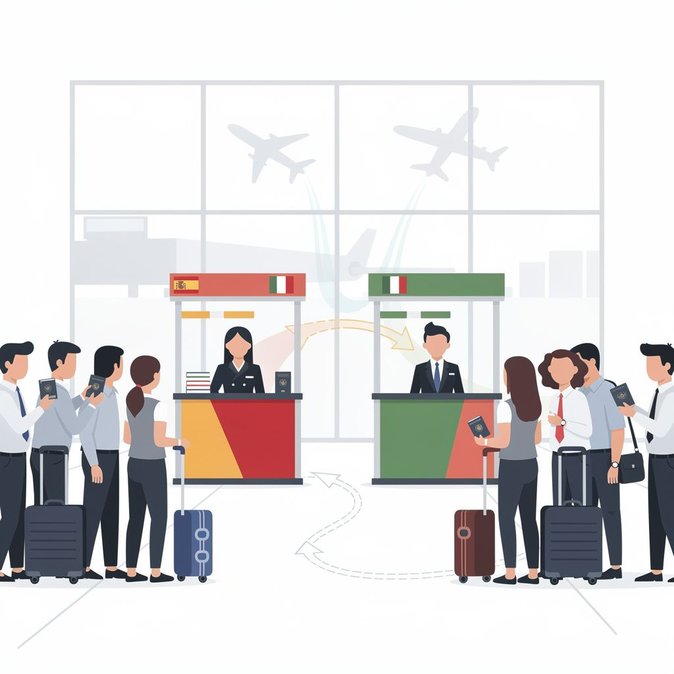
The Italian Interior Ministry has prolonged for another seven days the temporary suspension of Schengen free-movement rules on air and sea arrivals from Spain, government sources told the ANSA news agency on 16 October. The measure, first introduced in August amid a surge in irregular onward movements, allows border-police officers to carry out systematic passport checks on passengers arriving from Spanish airports and ports. Spain itself renewed identical checks on arrivals from Italy earlier this week, citing continued migration pressure along the Central Mediterranean route. According to ministry figures, almost 72,000 migrants reached Spain’s North-African enclaves of Ceuta and Melilla between January and July, with many attempting to travel onward to Italy and other EU states. Interior-ministry officials said the coordinated extensions are designed to give both countries “room for technical talks” aimed at phasing the controls out before the start of the winter tourism season. For business travellers the re-imposed controls mean presenting a valid passport or national ID card and, in some cases, proof of accommodation or return travel. Holders of diplomatic or service passports continue to enjoy expedited lanes. Airlines report average processing times of 8-10 minutes per passenger—manageable, but mobility managers should factor in longer queues at Milan Malpensa, Rome Fiumicino, Madrid-Barajas and Barcelona-El Prat. Legally the move is possible under Article 25 of the Schengen Borders Code, which permits member states to reintroduce checks for renewable, short periods in response to serious threats to public policy or internal security. However, the extensions have drawn criticism from the travel industry: the European Travel Commission warned that intermittent suspensions erode traveller confidence and complicate itinerary planning for multinational companies with pan-European operations. Negotiations between Italian Interior Minister Matteo Piantedosi and his Spanish counterpart Fernando Grande-Marlaska are scheduled for early next week in Brussels. Observers expect a roadmap that ties lifting the checks to joint policing initiatives and data-sharing on secondary movements.
Source: Anadolu Agency