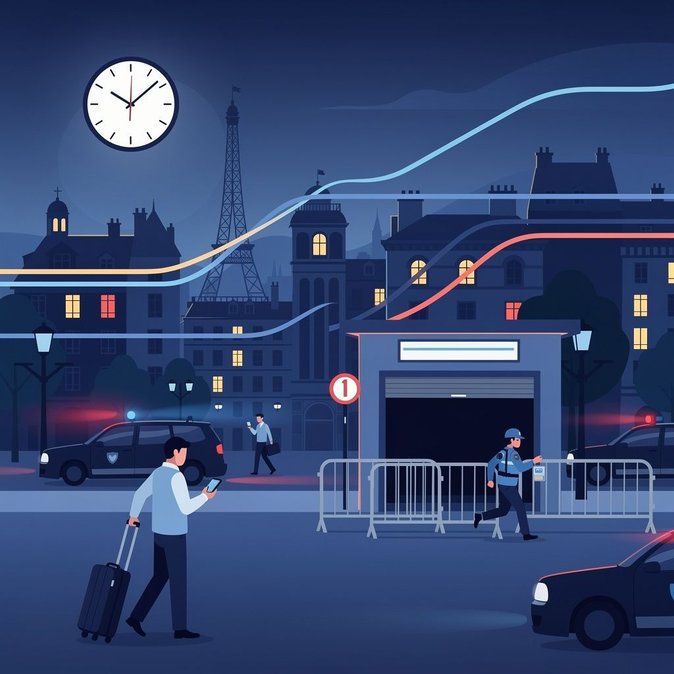
Corporate travellers and expatriates heading to France this week face a new layer of domestic mobility restrictions. Late on Tuesday, 20 October 2026, Prime Minister Sébastien Lecornu confirmed that ‘partial and localised’ night-time curfews will apply in Paris, Lyon, Lille, Bordeaux and Nice until further notice. The announcement follows two nights of rioting and looting that damaged more than 3,000 businesses nationwide. Under the decree, people must stay indoors between 21:00 and 06:00 in the designated zones unless holding an exemption letter for work, essential travel or medical reasons. Metro, RER and key bus interchanges will begin closing up to an hour before the official start time. Paris police have already released a list of 23 stations—including Châtelet-Les-Halles, République and Gare de Lyon—that will shut from 20:00, with taxis allowed to circulate only on perimeter roads. Inter-city rail and air services continue to operate, but late-evening departures risk last-mile challenges for arriving passengers. For employers, the curfews raise practical concerns around shift work, night audits, and post-dinner client entertainment. Multinationals are dusting off contingency plans first deployed during France’s 2020 pandemic curfews: arranging hotel rooms near offices, issuing attestation letters, and booking staff cars before 19:00. Businesses should also brief travellers on increased ID checks; police have powers to issue on-the-spot fines of €135 for curfew breaches, rising to €3,750 and six months’ imprisonment for repeat violations. Although the measures are framed as temporary, government sources told the press they could remain in force “for as long as necessary” and be extended to other cities at 24-hours’ notice. Travellers should therefore monitor local prefecture feeds and factor additional buffers into evening itineraries. Insurers warn that travel-disruption clauses seldom cover curfew-related costs; companies may need to bear re-routing or overnight expenses directly. Finally, the risk environment has nudged some corporate security teams to raise internal threat levels for France from “Guarded” to “Elevated” until calm is restored.
Source: AP / Le Monde / Sortir à Paris