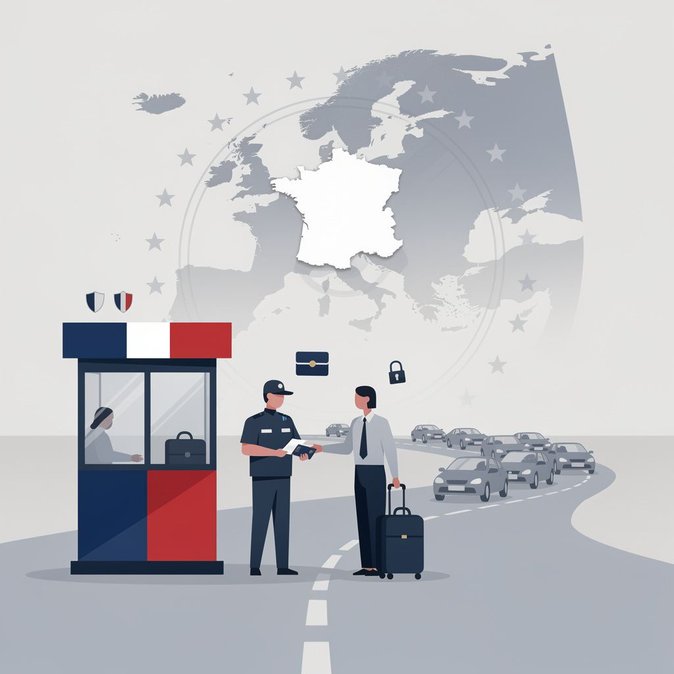
The European Commission’s Schengen dashboard, updated on 20 October, confirms that France has formally notified the temporary re-introduction of controls at all its land, air and sea borders from 1 November 2026 until 30 April 2027. Paris cites ‘persistent jihadist threats, rising antisemitic attacks and migrant-smuggling networks’—as well as security requirements for November’s Paris Peace Forum—as grounds for the six-month extension. In practice, travellers entering France from Belgium, Germany, Luxembourg, Switzerland, Spain or Italy should expect spot passport checks, vehicle inspections and occasional queueing even on ordinarily open Schengen crossings. Airlines operating intra-Schengen flights into French airports have already received NOTAMs instructing carriers to remind passengers to carry valid travel documents. Eurostar and Thalys say they will maintain current timetables but warn of possible ‘operational pauses’ if police request ad-hoc platform searches. For business mobility teams, the move revives compliance routines last seen ahead of the 2024 Olympic Games. Posted workers and cross-border commuters should carry both passports and proof of employment or residence, while transport managers should schedule extra buffer time for just-in-time deliveries crossing the Franco-Spanish and Franco-Italian frontiers. Companies running shuttle buses for posted staff must ensure drivers hold A1 social-security certificates and that passengers have printed attestations. Although Schengen rules allow internal checks only as a last resort, France has kept some form of border control in place almost continuously since November 2015. The latest notification therefore attracted muted political pushback in Brussels, but the Commission will require France to submit a proportionality report before any further extension beyond April 2027. Travellers should watch for incremental tightening around high-profile events such as the Peace Forum and the winter EU council meetings in Strasbourg. Importantly, the internal checks do not affect visa-waiver rights: holders of a valid Schengen short-stay visa or passport-exempt nationals can still circulate, provided they respect the 90-day rule. However, failure to carry ID could lead to summary fines or a trip to secondary screening. Global mobility managers are therefore advising staff to travel with passports rather than relying on national ID cards, even for day trips.