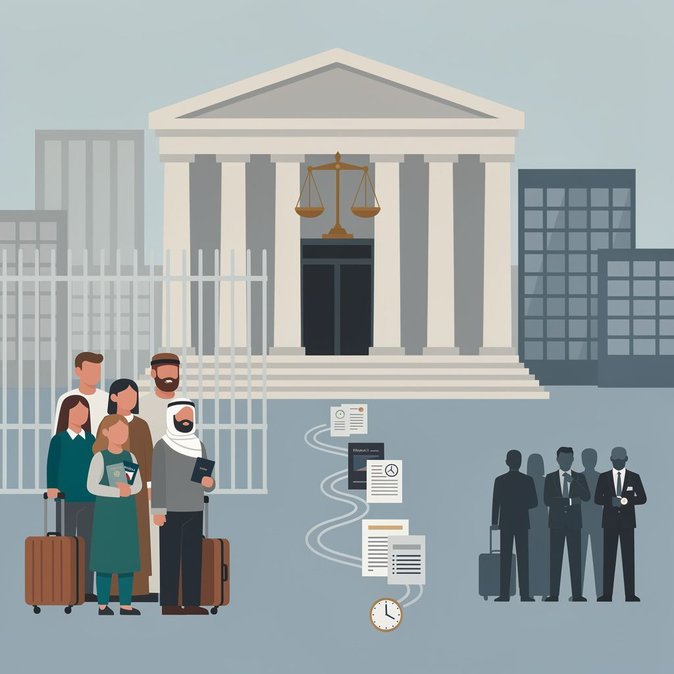
In a petition filed late on Monday, Palestinian-American activist Mahmoud Khalil urged the U.S. Supreme Court to give federal district judges clear power to decide—within days—whether an immigrant’s detention is lawful. Khalil contends that the current process, which forces detainees to exhaust administrative remedies before seeking federal court relief, can leave people behind bars for months or even years without meaningful judicial review. The case stems from Khalil’s own experience: the lawful permanent resident was held for more than three months after participating in pro-Palestinian protests at Columbia University in 2024, before a New Jersey judge ordered his release on constitutional grounds. The petition asks the justices to overturn a Third Circuit ruling that stripped district courts of jurisdiction until immigration judges rule on a case. Immigration advocates say the stakes extend far beyond one activist. If the high court agrees to hear the case and rules in Khalil’s favor, thousands of business travelers, students and employment-based visa holders who are swept into detention would gain a faster path to challenge their confinement. From a corporate-mobility perspective, the outcome could ease risk for multinational employers whose foreign employees occasionally become entangled in collateral enforcement actions—such as workplace raids or status checks—while awaiting visa extensions. Faster judicial review would reduce the time those employees spend in limbo and help companies avoid costly project delays. Legal analysts note that the Supreme Court has shown growing interest in the intersection of immigration enforcement and individual liberties. If certiorari is granted, practitioners should watch for briefs from business coalitions that rely on temporary work visas; many are expected to argue that prolonged detention of skilled workers undermines U.S. competitiveness. For now, HR and global-mobility teams should review crisis-response policies to ensure detained employees have rapid access to counsel and can document any due-process concerns that might support a habeas petition if Khalil prevails.
Source: Associated Press